
Vote Gavin Lyle — A portrait of an aspiring right-wing parliamentary candidate
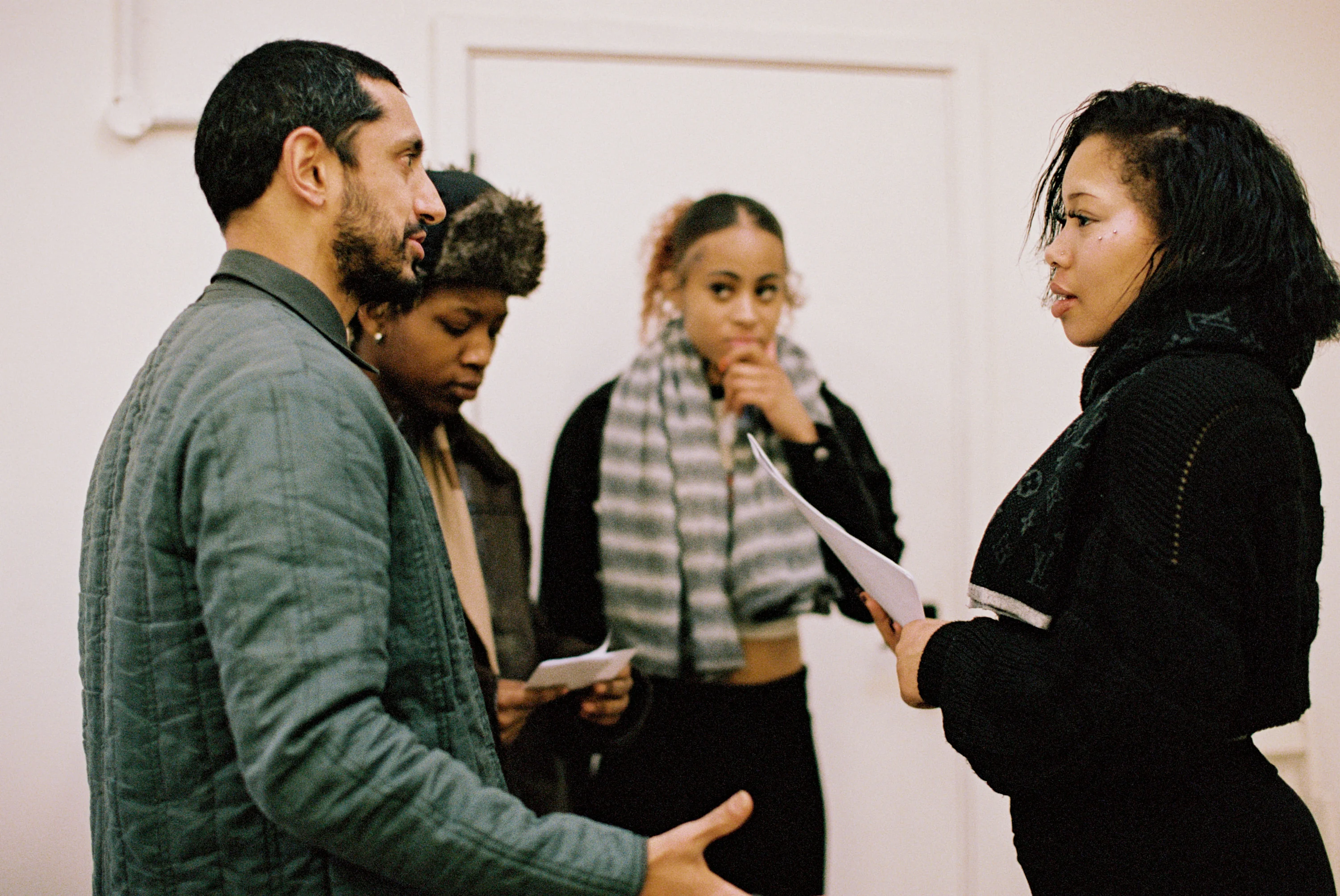
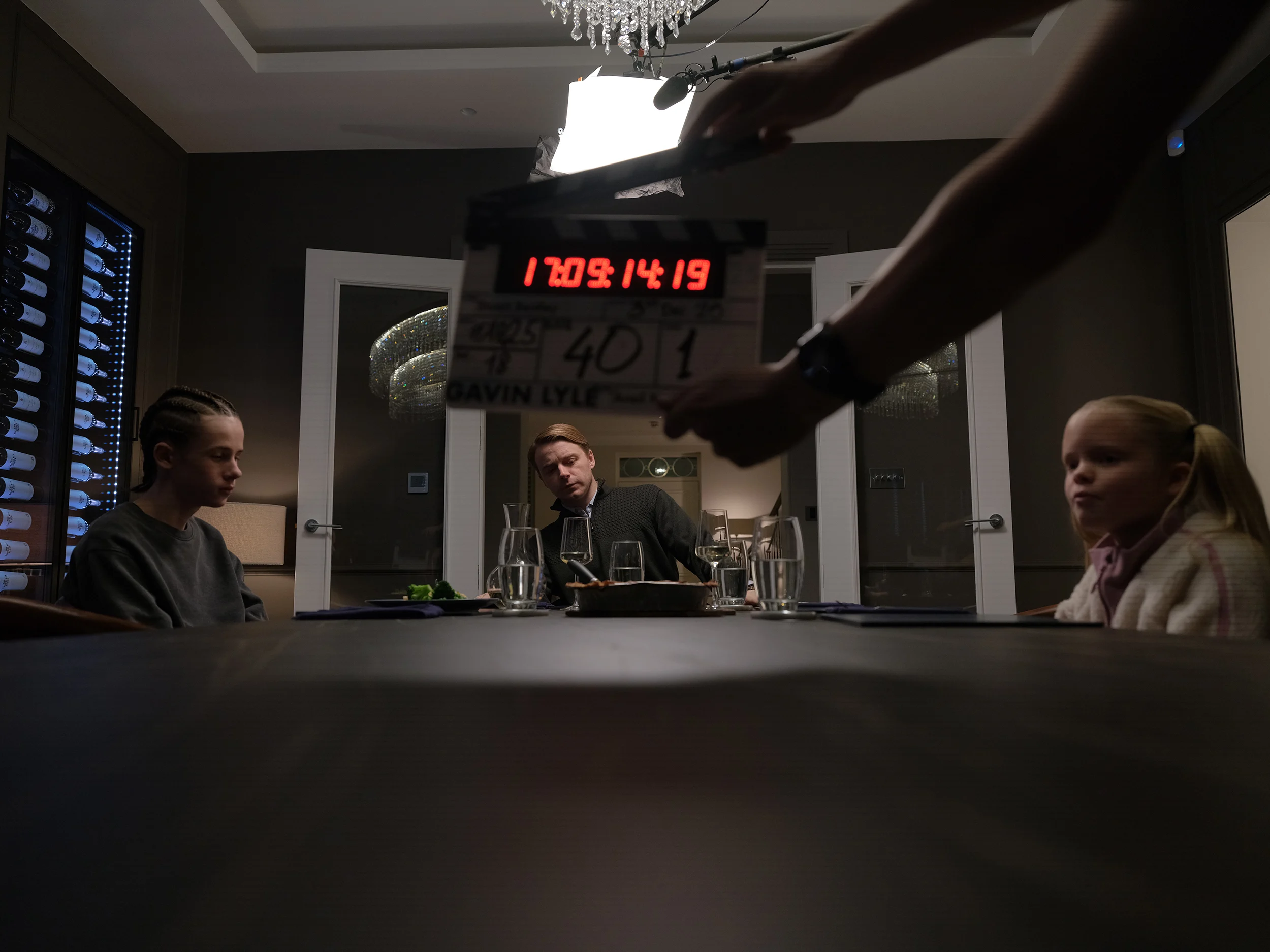
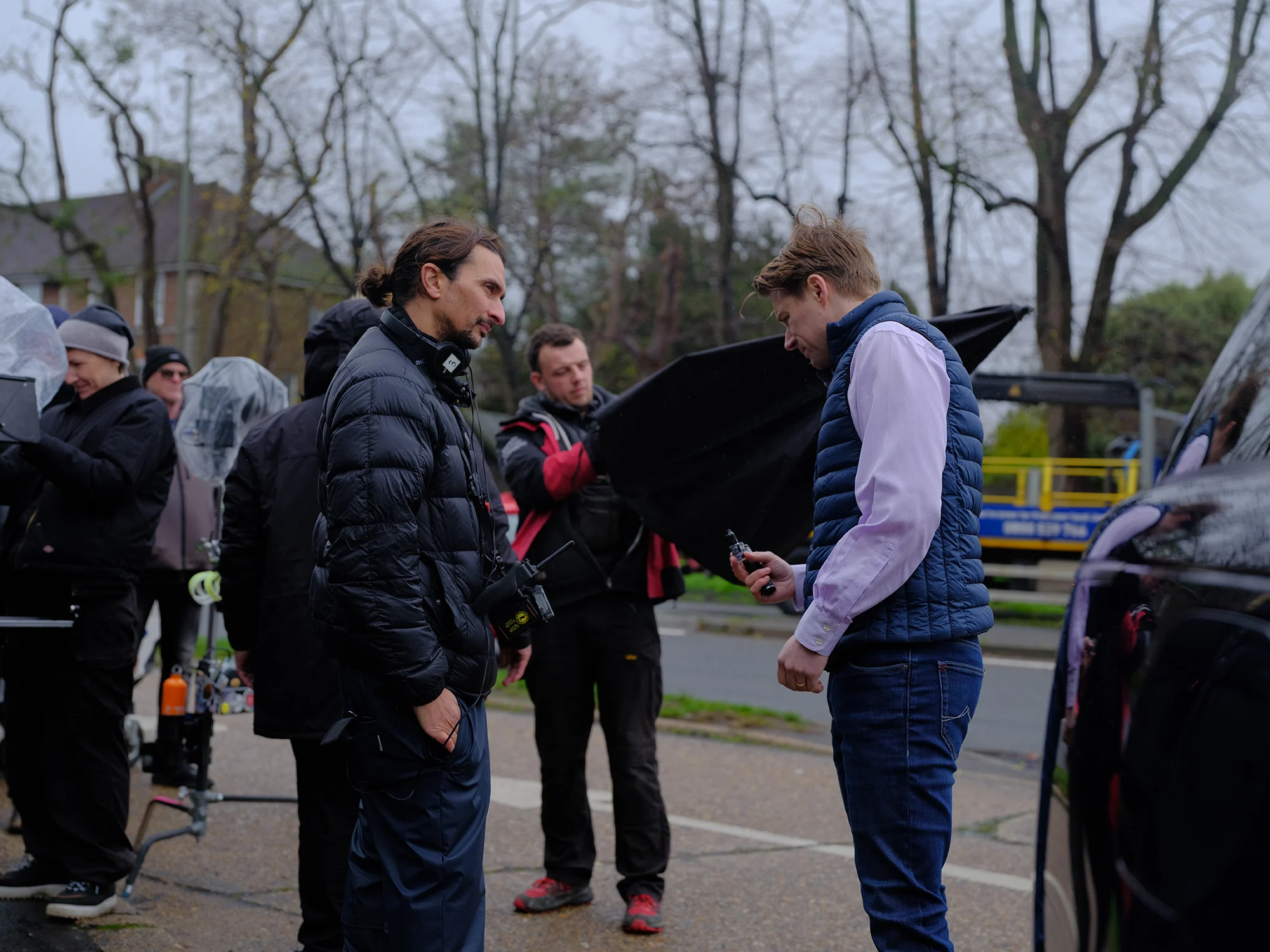
BTS images by Trey Joél Robinson.
A portrait of an aspiring right-wing parliamentary candidate
His second collaboration with WePresent, “Vote Gavin Lyle” is director Aneil Karia’s disquieting portrait of a middle-England family man and aspiring right-wing parliamentary candidate. Told through a series of intimate, observational vignettes, it follows Gavin over the course of a single day, exploring nationalism, masculinity and the quiet absurdities of modern British life. Produced by Somesuch, while the film is fictional, it feels eerily close to reality. Speaking to Charlie Brinkhurst-Cuff Karia dives into his motivations for making this film, at this moment in time.
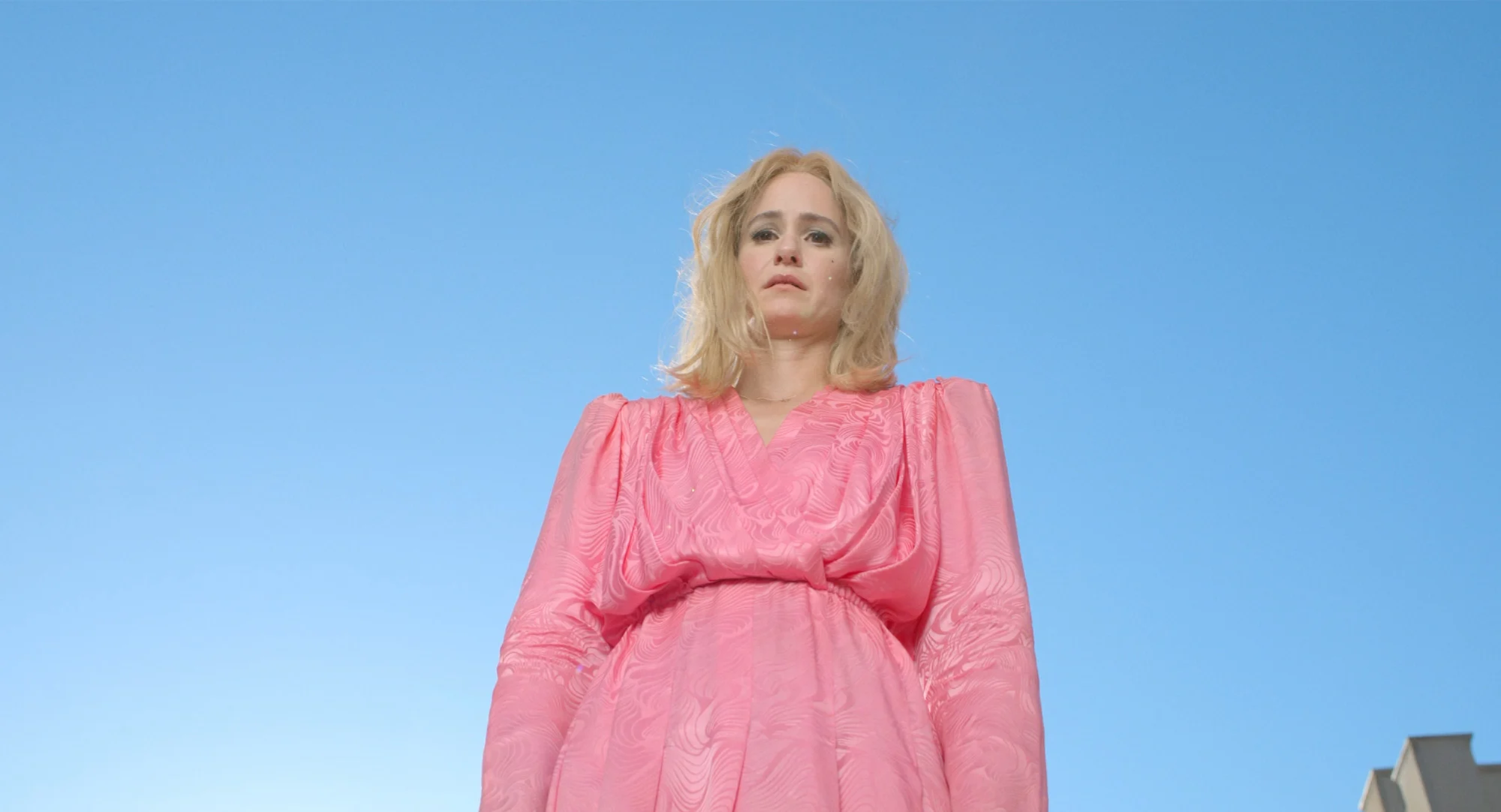
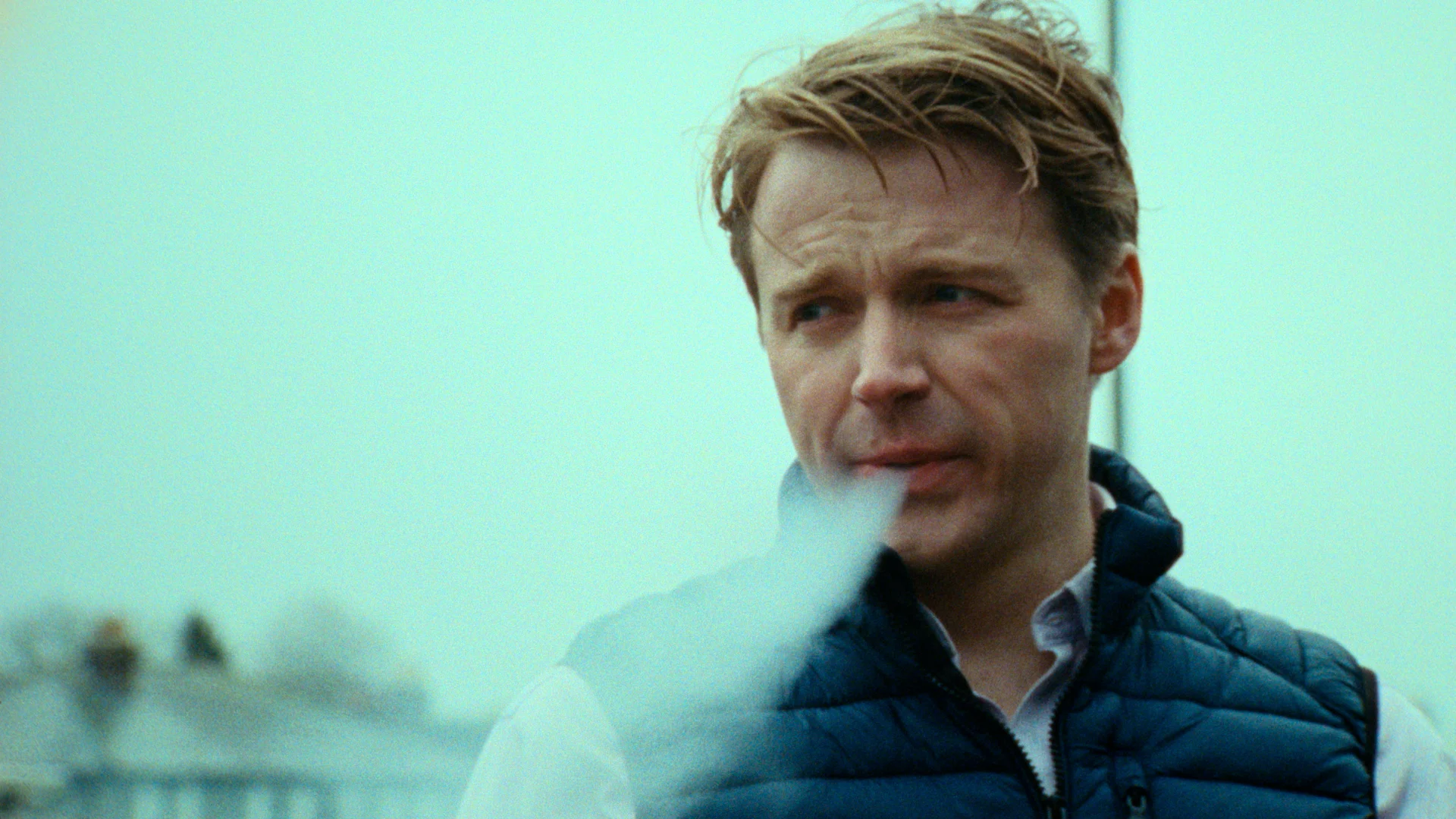
“A lot of these characters feel sinister to me,” says Aneil Karia while talking about the real-world inspirations for his new, unnerving short film, “Vote Gavin Lyle”. Lyle, played by Jack Lowden, is a very blonde, very buttoned-up right-wing British politician who is campaigning for a seat in parliament.
He is also, as Karia puts it, a man of thinly-veiled inauthenticity–a cipher for Karia’s concerns about the political landscape he finds himself in, where, if the polls are to be believed, Nigel Farage’s right-wing, immigration-obsessed party Reform UK are set to make major gains in the upcoming local elections. No mind that Reform has seemingly continuous racism scandals and has been criticized for its approach to running councils.
“You could just choose an easy life and not wade into this sort of character and this sort of political realm. It's not like it's going to make you any cash,” Karia says of Lowden’s choice to take on the role. “But, without speaking for him, I think he’s a person who absolutely sees what's happening [in this moment] and absolutely finds it as nauseating as I do.”
My experience of Britain, really, is that everything is quite repressed.
Karia, a 42-year-old director perhaps best known for his Academy Award-winning short film “The Long Goodbye” (2020), is no stranger to shorts which speak, in unsettling fashion, to the present moment. It’s a medium of creative expression that he continues to be drawn to. “There's this unfortunate idea that the short film is something you do when you're coming up, and then leave them behind and go into long form,” he ruminates. “I just think they're an amazing format to be more instinctive, more immediate.”
In “The Long Goodbye”, starring Riz Ahmed and released six years ago, South Asian families are dragged from their homes by the far-right and executed on the streets of a British suburb. “We did a lot of panels, or Zooms, about it [at the time],” Karia explains. “People would describe it as a dystopian, and I would make the point that it doesn't feel very dystopian to us… [recently] I've seen ICE videos which are more distressing than that film.” They haunt him, a little, it seems. The boundaries between reality and fiction have always been permeable, but today that line feels especially thin.
Karia’s work, which has spanned television (“The Gold”, and the upcoming “Ministry of Time”), to a recent Shakespearean feature film, “Hamlet” (also starring Ahmed), has often been described as “propulsive” and “visceral”, he says. “Vote Gavin Lyle”, in contrast, is quiet and slow, and, yes, sinister, in its observational style – punctuated by moments of clear humorous absurdity.
We first meet Lyle, a married father of two, in his bright white home, washing his extremely expensive car, and eating a bland-looking English breakfast. Everything about him feels meticulously controlled, from the gleaming surfaces to the way he moves through the space, as if performing normality rather than living it.
“My experience of Britain, really, is that everything is quite repressed. It’s a repressed existence, particularly outside of London. Things do feel quite muted, the palette, the atmosphere, the emotional landscape even,” says Karia. “He's curated this kind of lifestyle, which is quite clinical and kind of wipe clean.”
The film lingers in these spaces, letting the silence stretch just long enough to become uncomfortable. It invites the viewer to notice what isn’t being said.
“I have begun to see my country change over the years, and to slowly lose its sense of identity, its confidence, its pride,” Lyle says in a subdued voiceover. “And I’m afraid a lot of that comes down to immigration. And that’s not racism, that’s just the way it is, I’m afraid.” It almost sounds like a reasonable statement, and Lyle moves through his world with a studied calm. But every now and then, the mask cracks.
“What was interesting to me with this film is that the people purporting to be our saviours are also shit scared and vulnerable and, like, fucking deeply confused,” Karia says about the film’s genesis. “I don't think it's useful to look at a certain kind of political party, or figures, and make a film saying, ‘Look how nasty and awful you are’. It's more potent to look at their vulnerabilities.”
Is it actual, sincere care for their own communities, or is it something else?
In the UK, the far right, those dedicated to ideas of nationalism, conservatism, racial and cultural superiority, and anti-immigration sentiment, are on the rise. In 2025, the country saw its biggest ever far right march, led by Stephen Yaxley-Lennon (aka Tommy Robinson) and supported by Elon Musk, when more than 100,000 people took to the streets of London in September, calling for immigrants to be “sent back” and claiming that “Islam is our real enemy”. Yaxley-Lennon has a second march planned for May.
Karia, who grew up in a suburban part of Ipswich, Suffolk in a multicultural white British and Indian family, takes the long view. He says he knows people who voted for Brexit, who will vote for Reform. And, to an extent, he understands why.
“People have been so let down by the entire political system”, he says. “People are so disenfranchised with it that, of course, they're looking for answers somewhere. These parties' offerings are really compelling on the surface. My real problem is with the people who run things and the inauthenticity, the disingenuousness of their behaviour and the exploitation of real problems to forward their own careers.”
Lyle embodies this sentiment entirely. He’s a wealthy, spindrift of a man who runs care homes for patients with dementia, and, it’s lightly suggested, is running to be an MP for his own career gains rather than any type of love, care, or connection to his community–who he has no shame in lying to about his personal life.
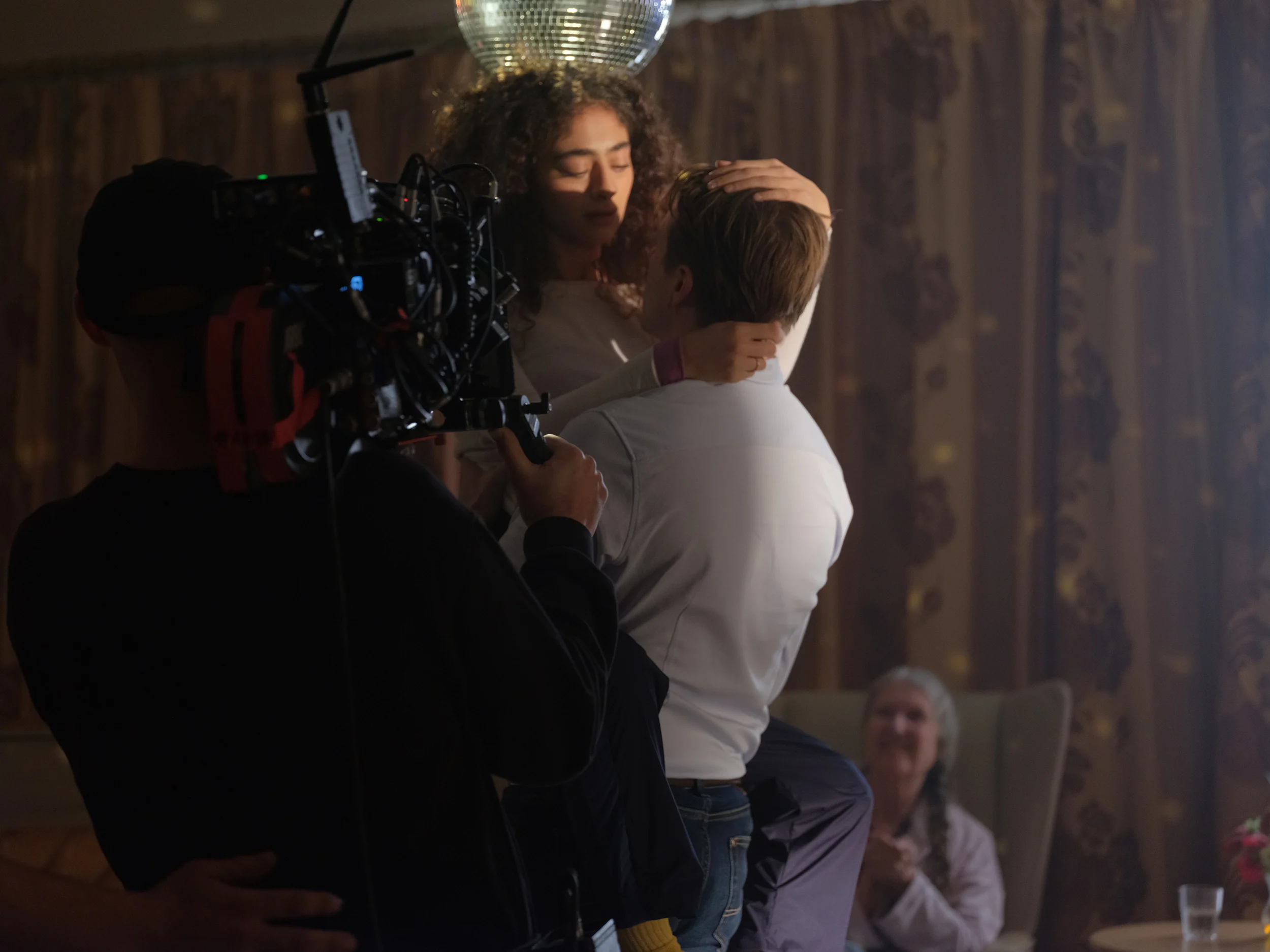
Right at the end of the film, however, things take further a turn to the absurd. Lyle, having spotted a beautiful woman wearing a hijab in a corner shop, bemoans the fact that she has covered up her “gorgeous hair”. It’s a clear nod to a narrative which has permeated far right discourse in recent years. “I find it particularly grotesque how part of the far right narrative has become about their caring for women and children,” Karia says. “It feels so cynical.”
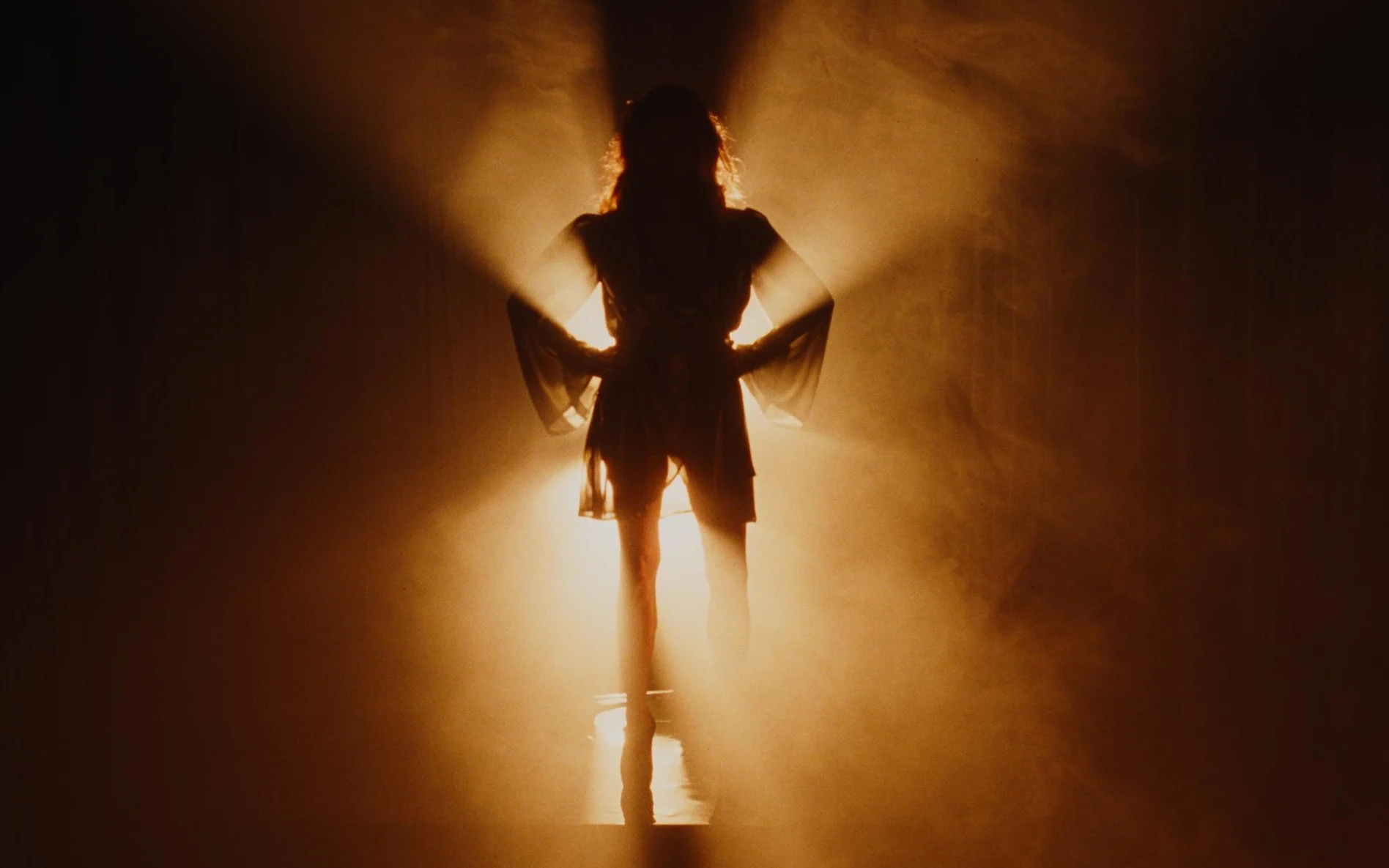
But then, as Lyle settles down in front of the TV, he starts to doze off, and daydreams about dancing with the young woman. Her hijab is nowhere to be seen, her hair is abundant. “He's yearning for something that he purports to despise, and does despise.”
It’s a fitting tribute to the ridiculousness of our political arena, where a 19-year-old Reform council leader, who speaks with the unearned intonation of a 50-year-old, seems closer to parody–but also the darkness underpinning it all.
The best case scenario for the film, Karia says, is that it provokes someone to think a bit more deeply about who these people are and what's driving their political agendas. “Is it actual, sincere care for their own communities, or is it something else?”
“Vote Gavin Lyle” is a state-of-the-nation film. It’s being released, with intention, Karia says, just before the local elections on the May 7, 2026, because it will help it to feel like a “fizzy, cat-nippy”, part of the conversation. But, Karia says, crucially, he wants it to punch up, rather than down. Because that’s where the real power is held. In the slippery hands of men like Gavin Lyle, in places like Fletcham and Wold.