From an early age, Olly Williamson had a keen interest in drawing from observation. He remembers feeling like something of an outsider, as if he was witnessing the world from a distance. Those early experiences now translate into artworks that separate the viewer from each scene he creates—from the shifty, unwelcoming side-eyes of his characters to plants and furniture keeping us at arm’s length. He tells Emily Steer how he captures the quiet rhythms of the world around him while retaining a sense of detachment.
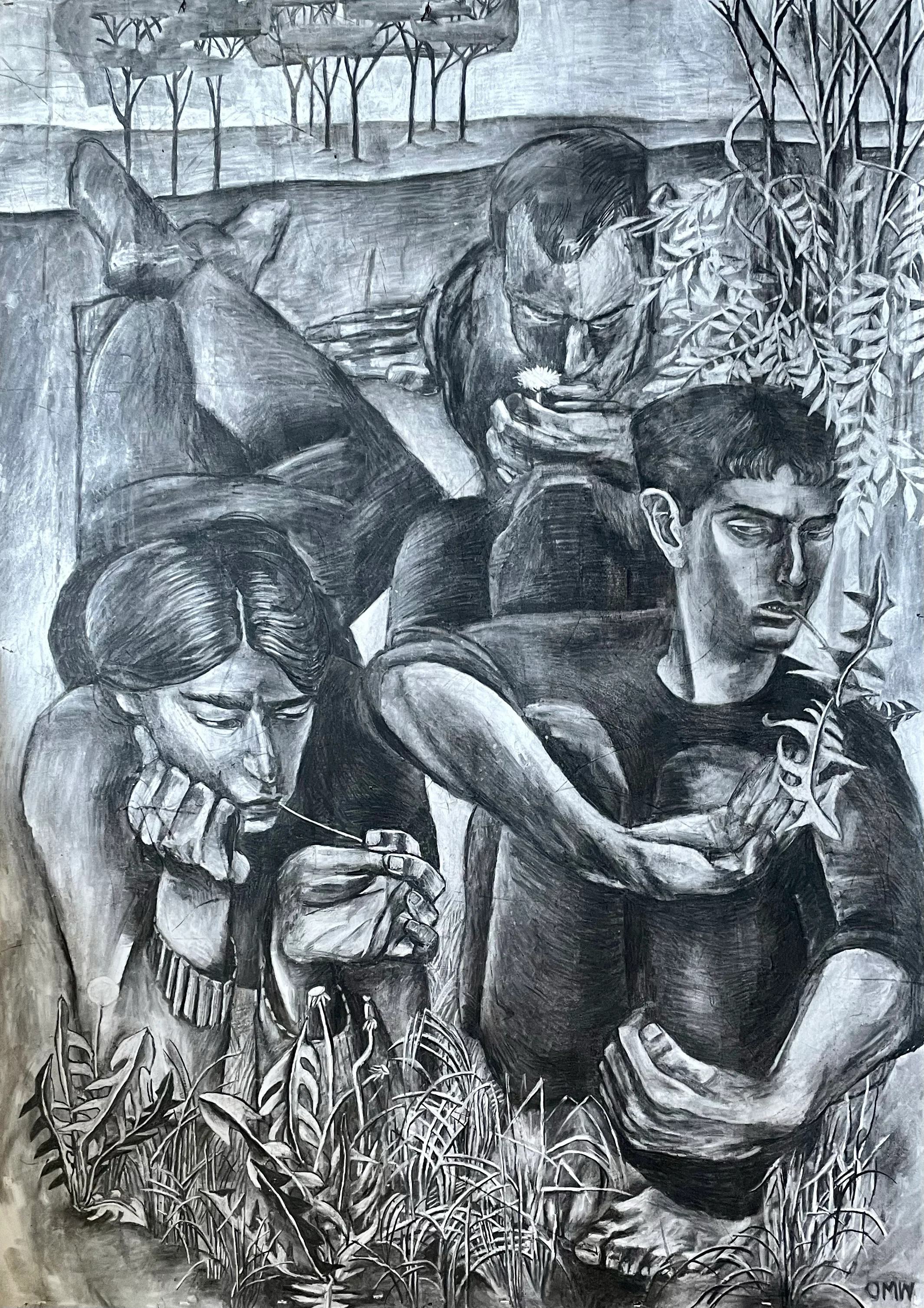
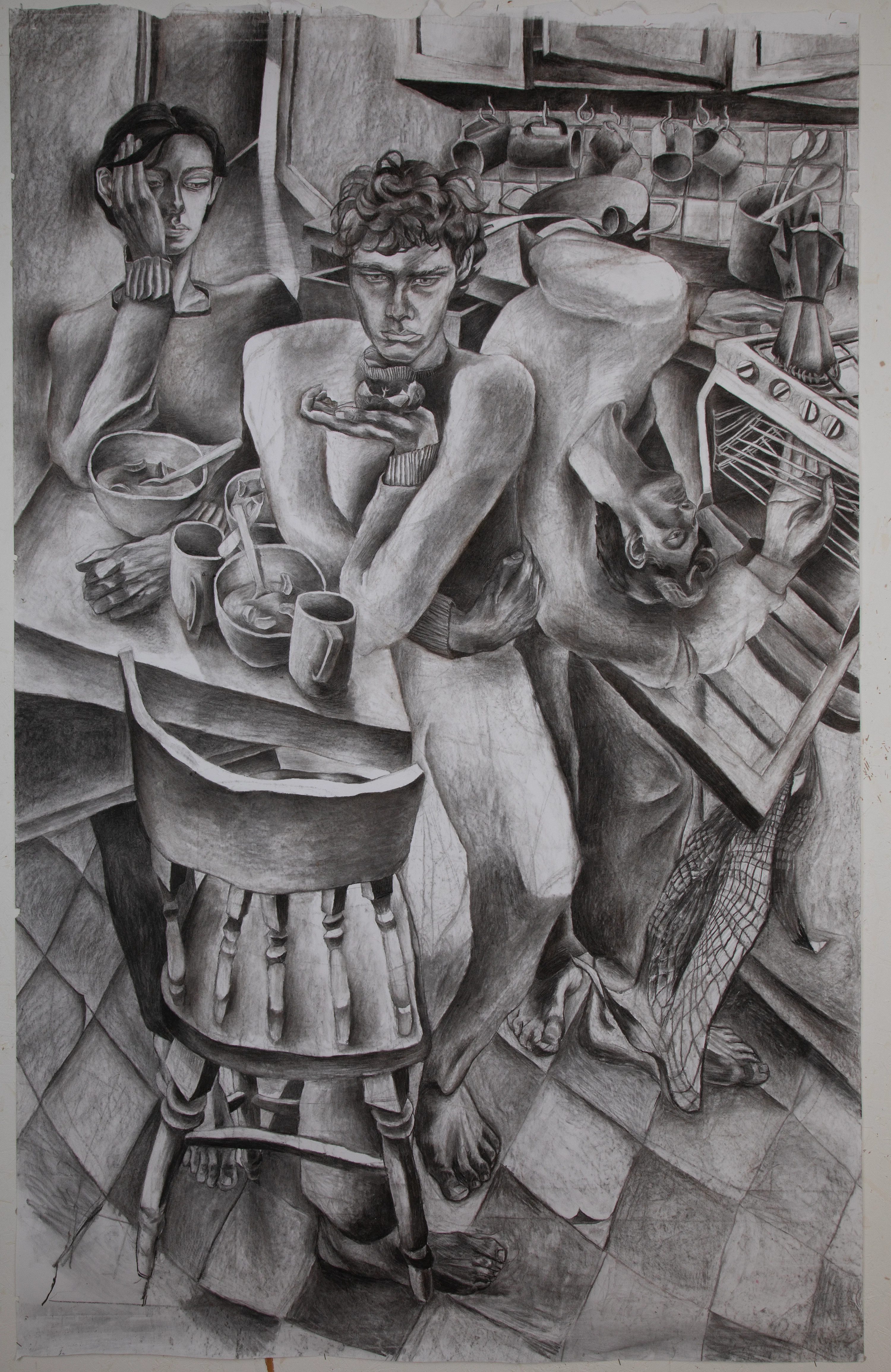
Olly Williamson’s drawings, paintings and etchings are simultaneously familiar and disquieting. They show people lounging in nature, crowded into domestic settings and clutching animals. The compositions are packed with jostling plants and furniture. This spatial busyness contrasts with an emotional stillness that runs through them, as his subjects often gaze calmly out of the frame. They capture how it is to exist within a group while feeling as though you are outside of it.
There was a lot of staring at ants… also this classic thing of feeling a little on the outside, and feeling more like you’re witnessing the world.
Williamson grew up in a village near Preston and was inspired from a young age by his mother, who studied surface pattern design before running a business as a signwriter. She also painted backdrops for local school plays. “I remember going with her to a high school,” he says. “She put every bit of effort into this huge, life-sized southern American scene with all these cutout figures. That must have been a seminal memory for me.” He recalls her precise drawing and gridding up; a meticulousness that feeds into the careful design of his own work.
After graduating from a BA in fine art at Manchester School of Art in 2016, he started a regular drawing practice, embracing a medium he had enjoyed since childhood. “I was very interested in drawing from observation [as a child],” he says, describing himself as an introvert. That observation has carried through to his work now, and has also fuelled the sense the viewer might have of sitting slightly removed from his scenes and the people in them. “There was a lot of staring at ants and observing what was going on in the natural world. Also this classic thing of feeling a little on the outside, and feeling more like you’re witnessing the world.”
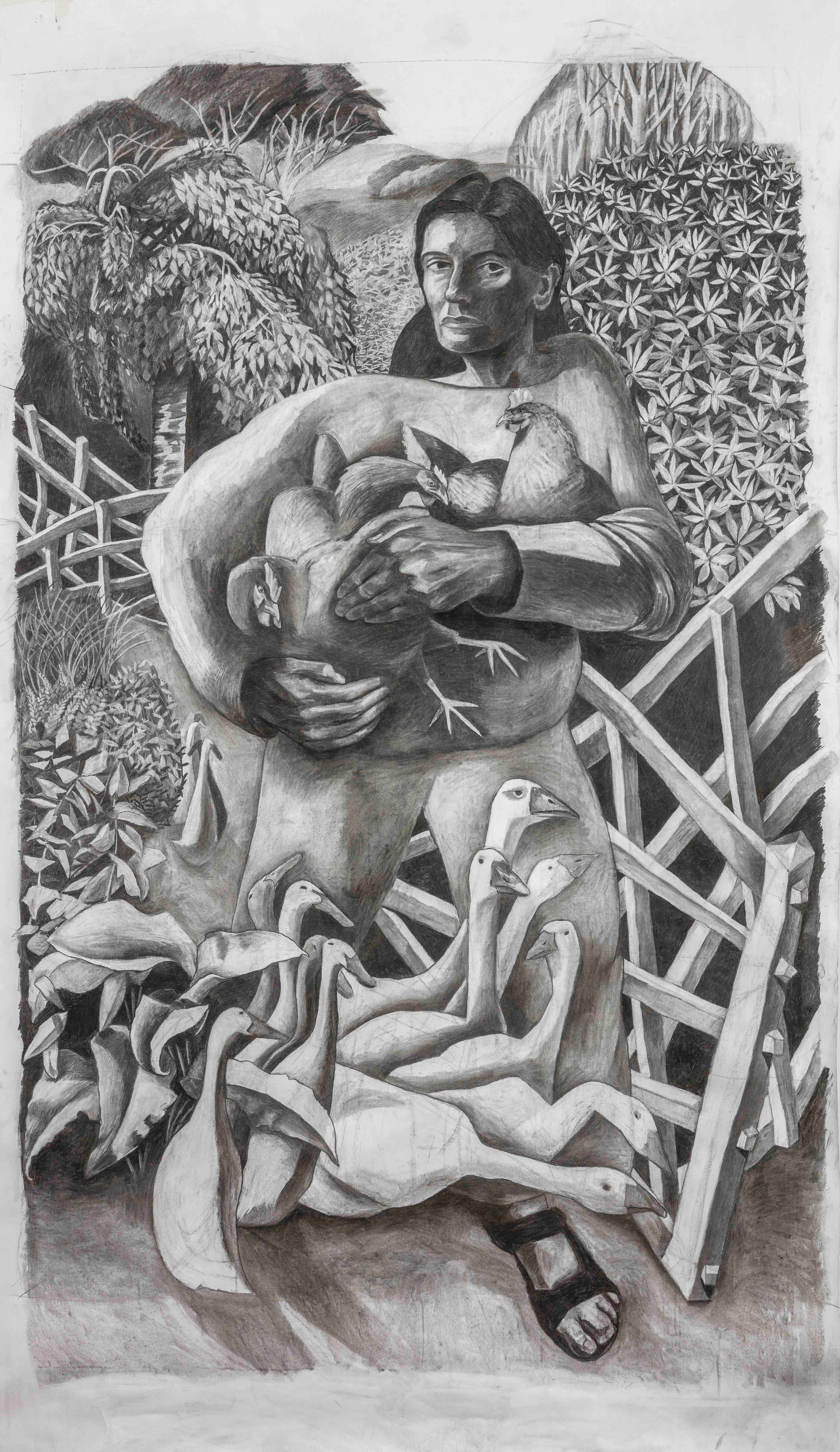
He later joined London’s prestigious Royal Drawing School, where he honed his techniques and repeatedly visited the etching workshop. While he now works across charcoal, oil paint and ink, the confident, scratchy lines that are characteristic of etching can be seen in his work, which he describes as being akin to carvings. His final piece, “Johanna and the Birds” (2023), is a vast charcoal homage to his mother. She is shown holding a group of chickens, surrounded by ducks and abundant foliage. She looks straight at the viewer—and artist—with a stern expression, a powerful matriarch in a setting that combines the human made and natural worlds.
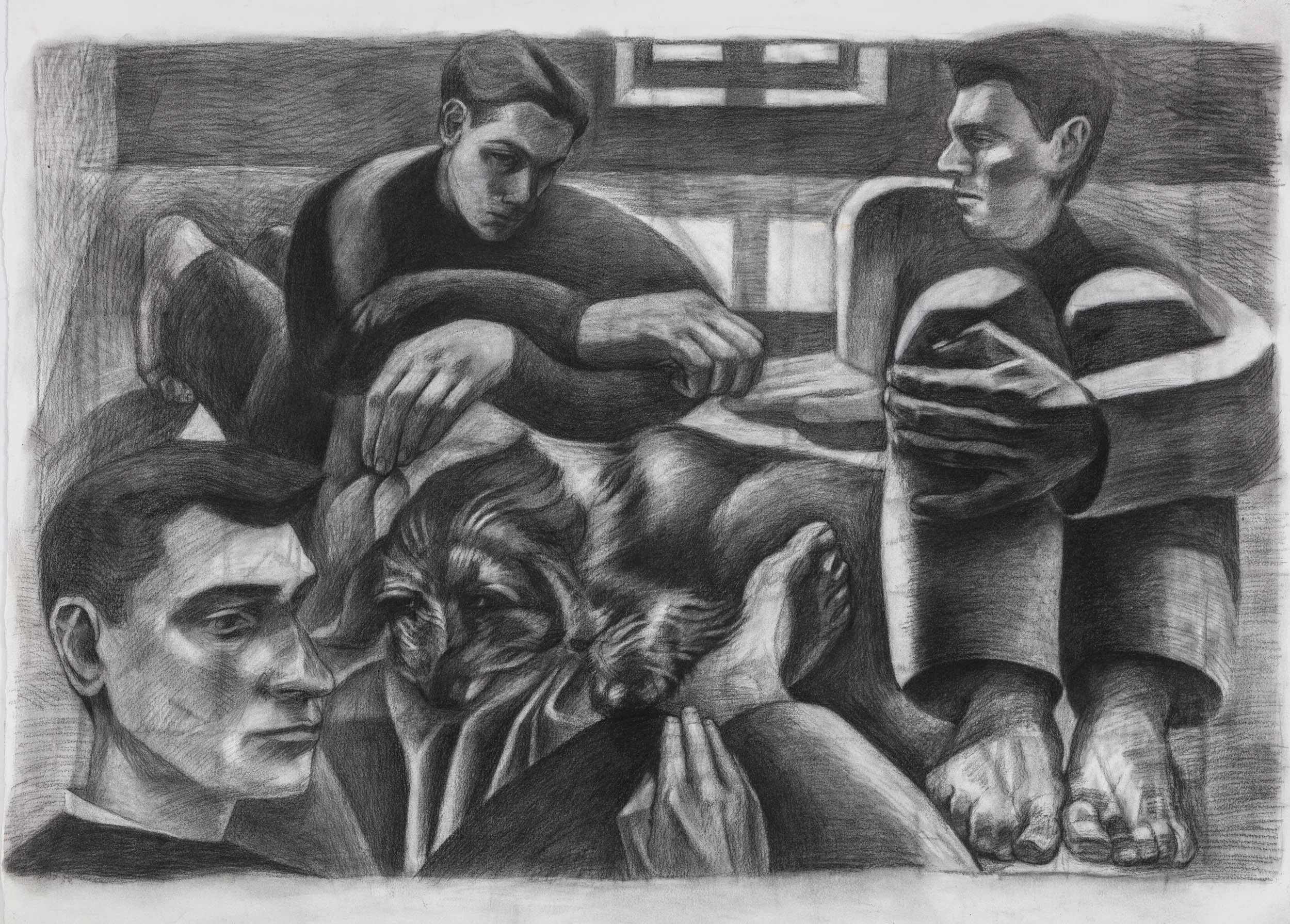
There are a lot of people in my drawings doing the shifty side eye. It’s as though you’re not really meant to be there.
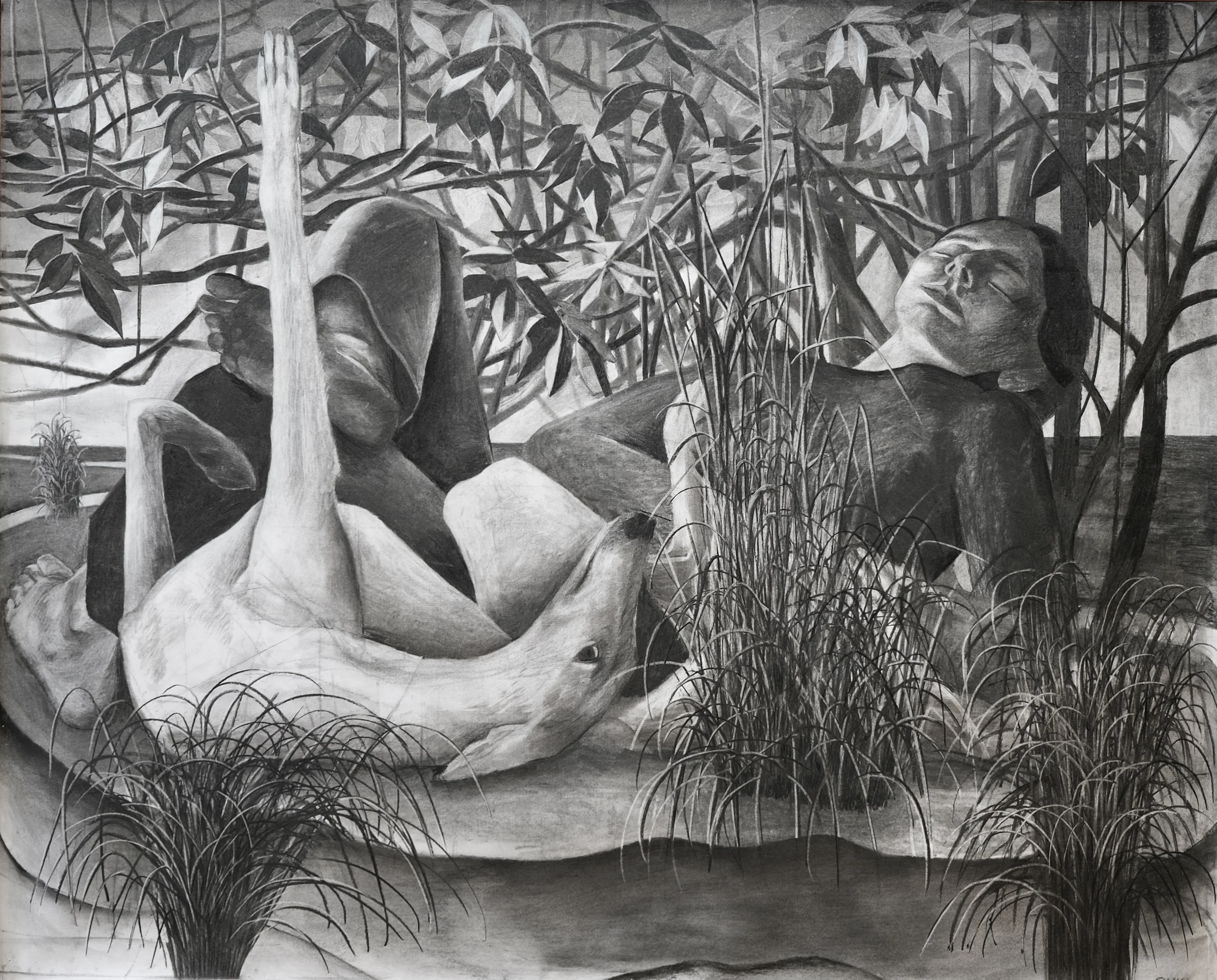
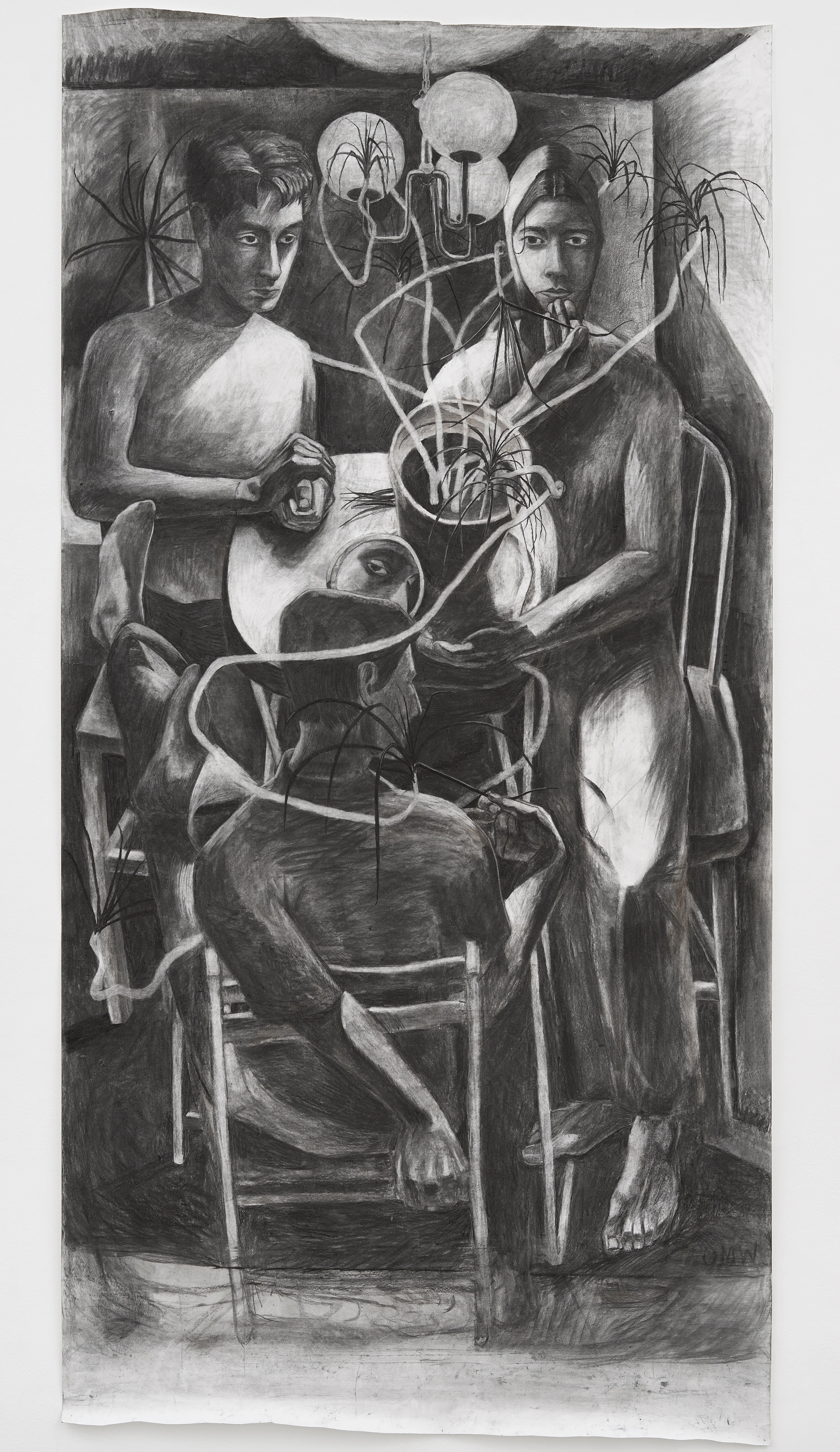
Recent works also play with this line. For example, in the charcoal drawing “Pruners” (2026), a group of people sitting around a table indoors are partly consumed by a houseplant in the centre, which wraps its tassely tendrils around their shoulders. “Under Elder” (2026) is a charcoal and chalk drawing showing a woman reclined with a lean sight hound beneath an elder tree. It is both peaceful and sinister: while the figure looks serene, the work reflects on the folkloric idea that elder trees’ mildly narcotic properties could send people into a dangerously deep slumber which they might not wake up from.
Despite its at times surreal nature, his work is rooted in the everyday. “All the huge concepts in the world can be found in just getting out of bed, or looking over at a tree,” he says. “It’s the basic thing of being a creature that is alive. I don’t really need anything more than that to feel excited about making a piece of work.” While he doesn’t like to spell out the exact moods that have fed into each work, he does recognize that his feelings in the studio and his experience of introversion imbue them with a strong psychological intensity. “I think it’s good to have some mystery,” he says. “But I’m interested in what kind of images I make if I’m feeling very down or low energy compared to more high energy. What kind of things am I thinking of in these times? Then there are other periods of calm rest.”
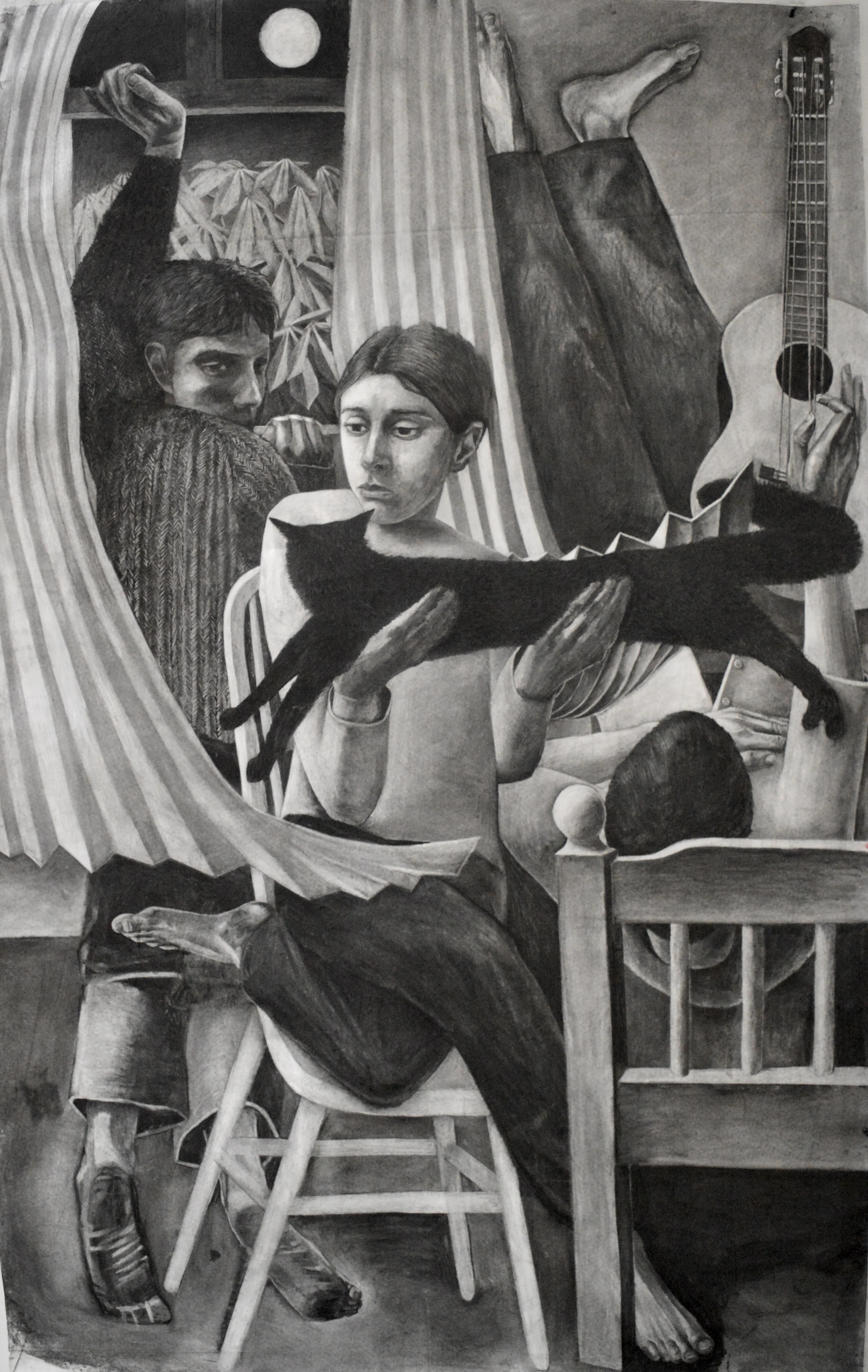
His depiction of space plays an important role in turning everyday moments into something more. The tight compositions mirror the feeling of being an awkward teenager in a group of friends with people you don’t fully know, sitting outside the circle rather than part of the group experience, where everyone is within the field of vision.
“Pruners” is composed to make the viewer feel like another person at the table, though we aren’t made to feel like part of the activity. In another charcoal work, “Around Midnight” (2026), three figures sit close together, one half wrapped behind a curtain, another sitting cross legged on a chair holding a cat aloft, the third facing away from the viewer with his legs up the wall as he casually strums a guitar. Again we are close to the scene, but the furniture and figures prevent us from truly feeling welcomed. “There are a lot of people in my drawings doing the shifty side eye,” he says. “It’s as though you’re not really meant to be there. It’s this slight separation. At its extreme it’s like a dissociation. Like having a conversation with people and seeing it from the outside…”