
Based in Chamba, a small town in India's northern state, photographer Kanwar Pal Singh has spent the last decade uncovering the lesser-known celebrations hidden in the crevices of the mountain ranges. He tells Darshita Goyal about Raulane, an ancient spring festival that stands at the cusp of digital invasion; he makes a case for sharing rituals while preserving the stories they are born from, and resisting the urge to fetishize.
On a wintry morning at the tail end of 2025, photographer Kanwar Pal Singh woke up to a series of message requests; some from budding fans and many from the Indian press. Someone had shared his photos on X and the post went viral. While most creatives would be delighted by the attention, the 30-year-old approached the visibility with resistance. The photographs in question capture Raulane, a mythical festival that unfolds annually in Kalpa, a mountainous village in the northern Indian state of Himachal Pradesh.
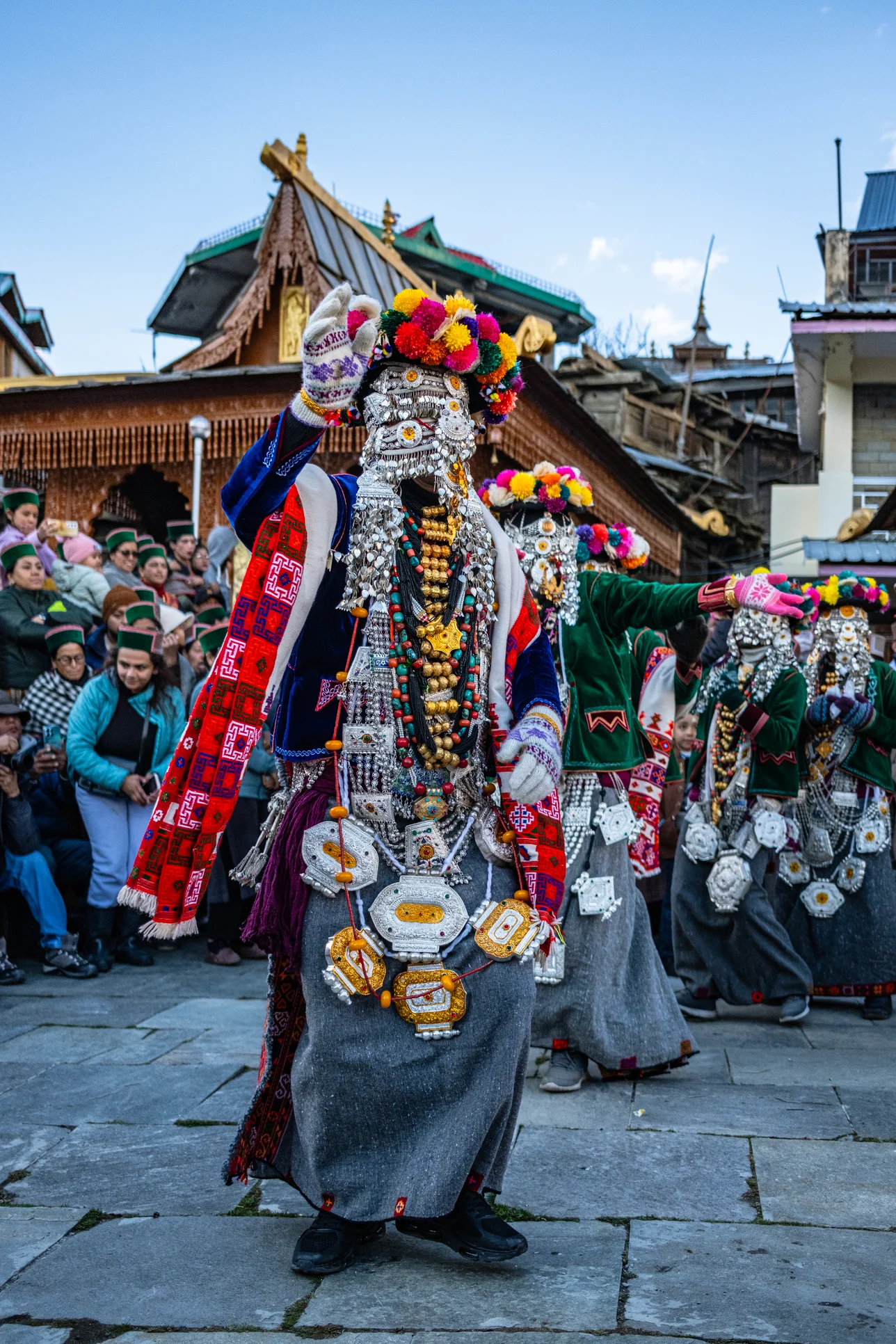
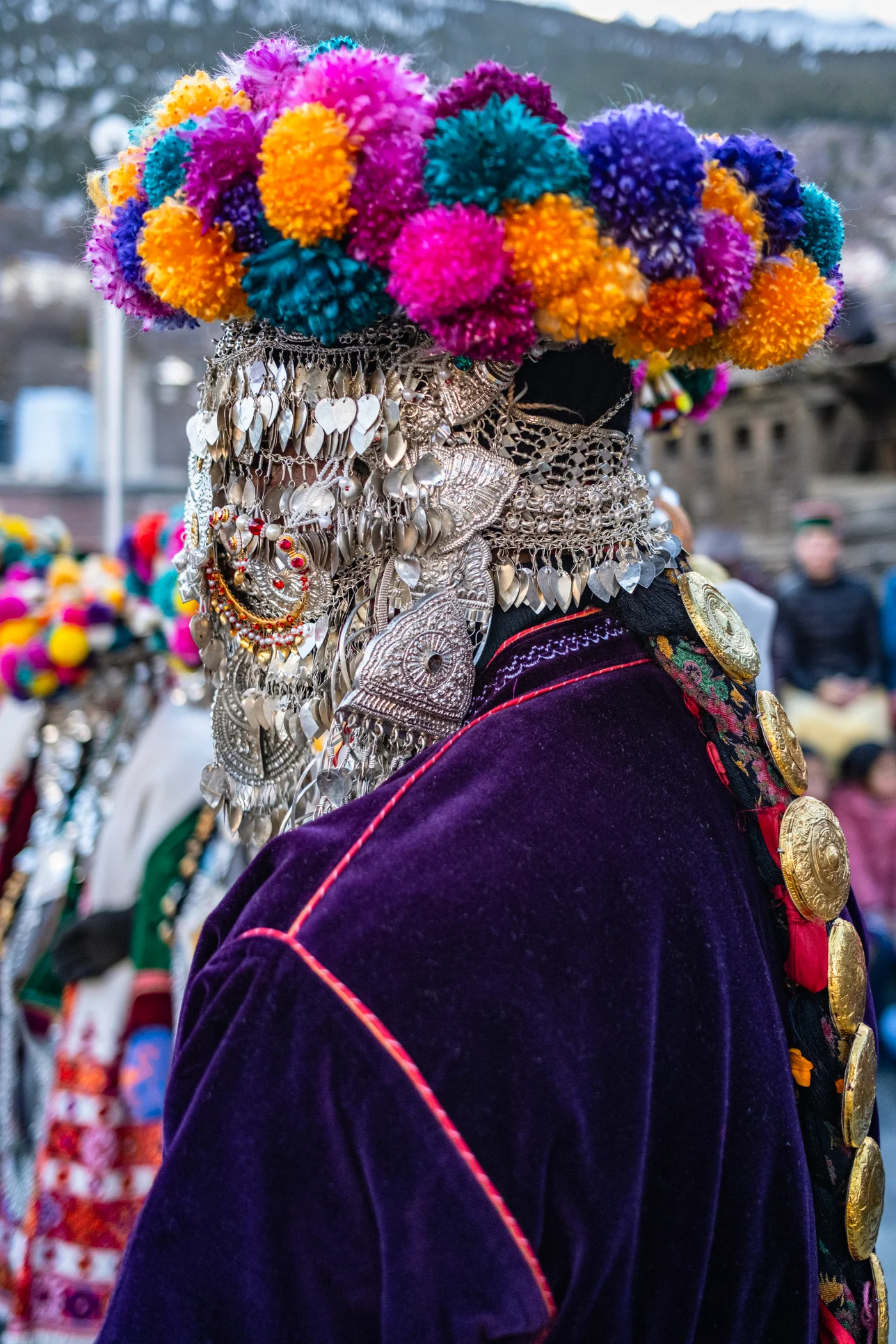
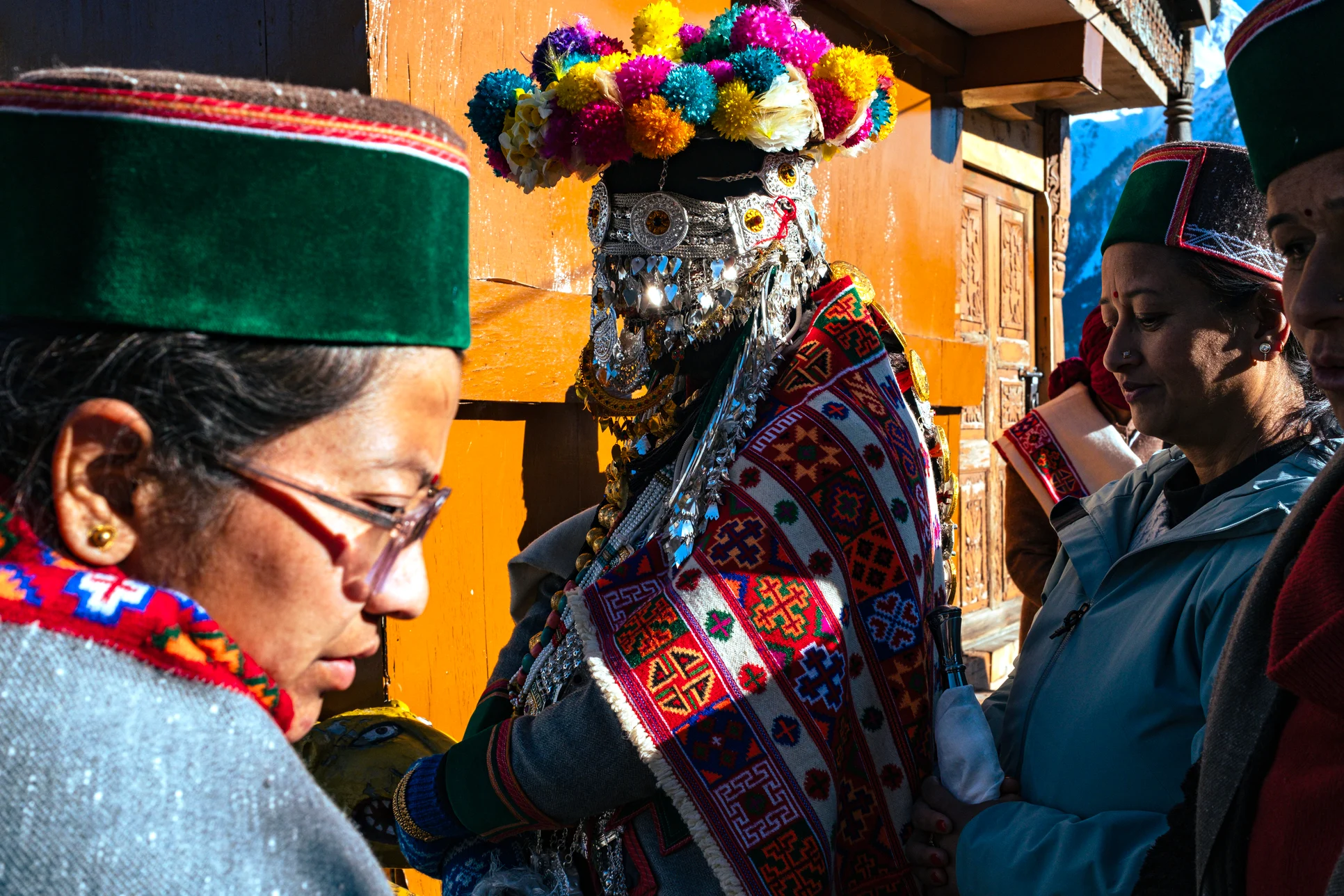
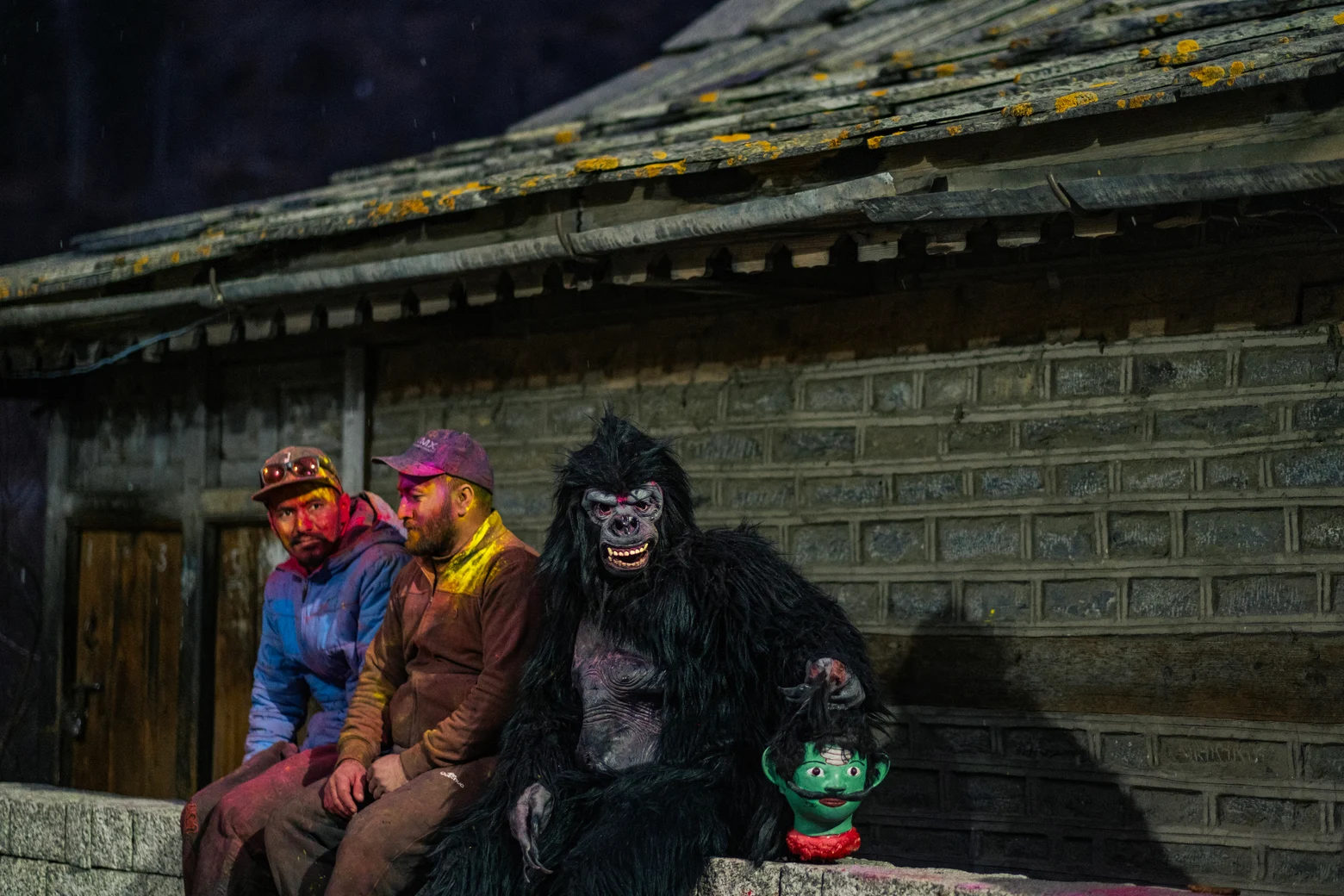
Over five days in March, locals across the Kinnaur district gather to mark the end of winter and the beginning of a more forgiving spring. Visually, the colorful festival is like nothing you’ve seen before—dressed in handwoven shawls and draped in layers of indigenous silver jewelry, people dance joyously to remove any nazar (evil eye) or negative energy left behind by the cold months, making space for prosperity. “Some wear fierce masks and perform rituals to keep the harmful spirits away, they are called Zannpundulus,” explains Singh, pointing to an eerie image of a man in a long-feathered, animalistic mask.
But after the pictures of the festival went viral, a tradition that has been preserved for decades in a far away village came into the spotlight in mainland India, with little to no context of the community it belongs to. “Everyone was rushing to get a headline, people in big cities won’t understand what the culture is,” Singh says. “We don’t want anyone to make fun of it, already on Twitter there is so much mockery, [homophobic] people are comparing it to gay marriages, I worry about how it will change everything going forward.”
Based in Chamba, a Himachali town about 800 kilometers from Kalpa, Singh spent the last decade travelling across the icy mountains acquainting himself with the many hyperlocal pockets of the land. After studying the art of photos at Delhi’s prestigious Raghu Rai School of Photography, he worked with several renowned brands, before realizing that his passion lay closer to home, in documenting the celebrations that often go unspoken amidst India’s more popular traditions.
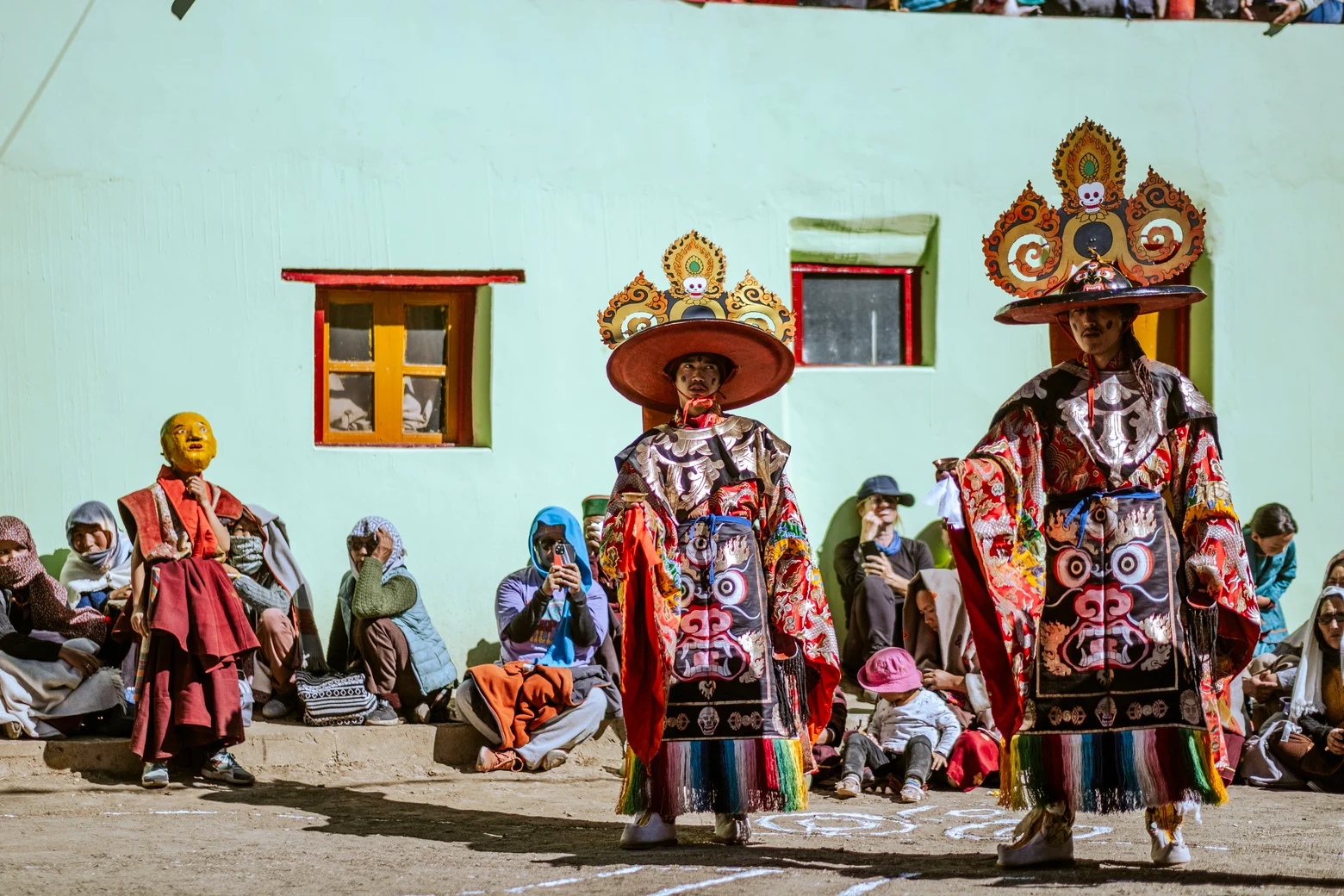
You may have heard of Diwali and Dussehra but Singh is intent on experiencing more. From the Tibetan Buddhist Gustor Festival—held at the world’s highest motorable village Komic in Spiti Valley—that sees monks performing masked dances to portray the triumph of good over evil, to Sangla Holi, another Kinnauri tradition where Hindu and Buddhist rituals seamlessly blend together for the festival of colors; the photographer goes far and wide to see India beyond the conventional. “I always take permission before I visit for photos,” he says. “People are comfortable as long as you approach it with care.”
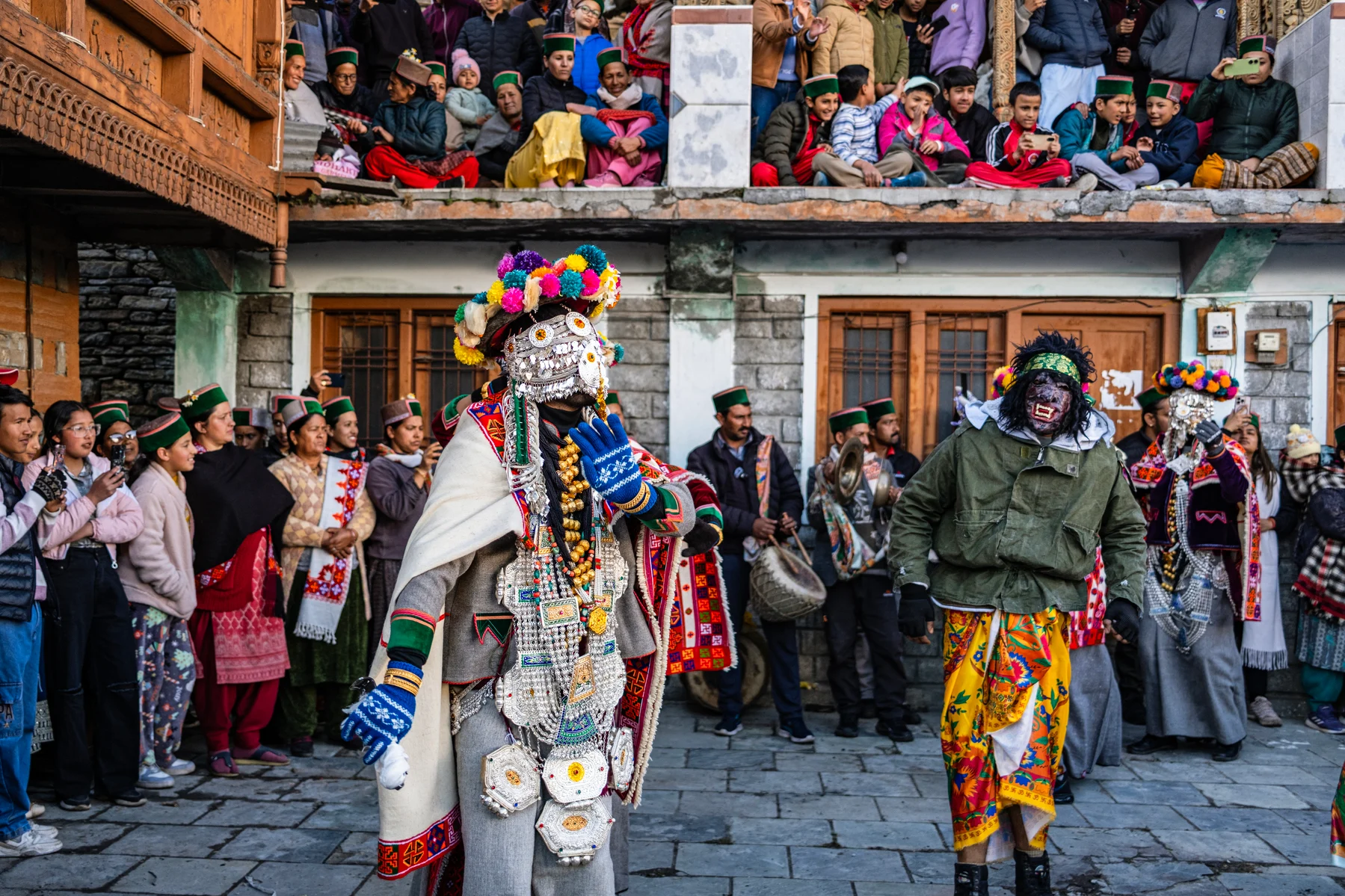
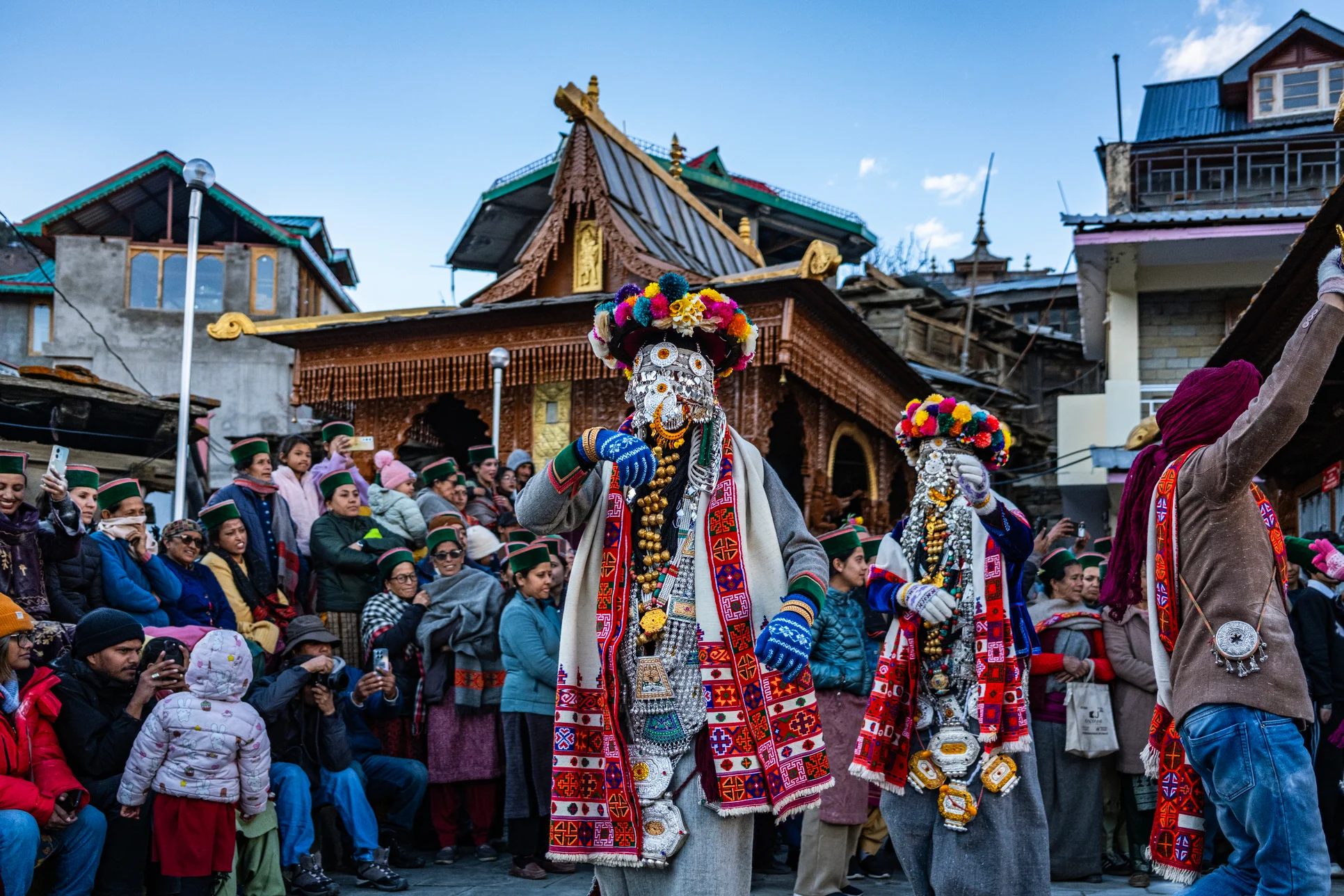
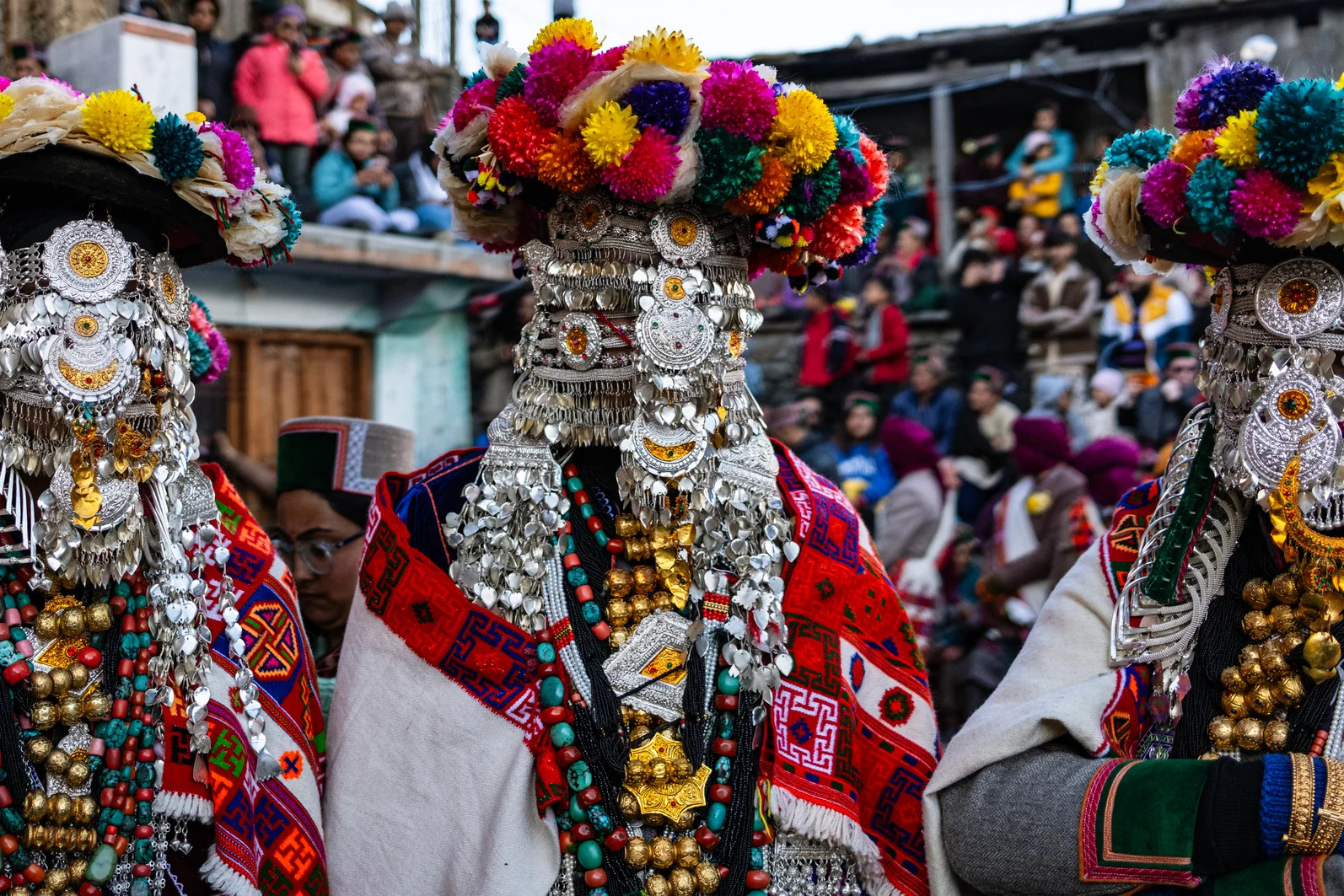
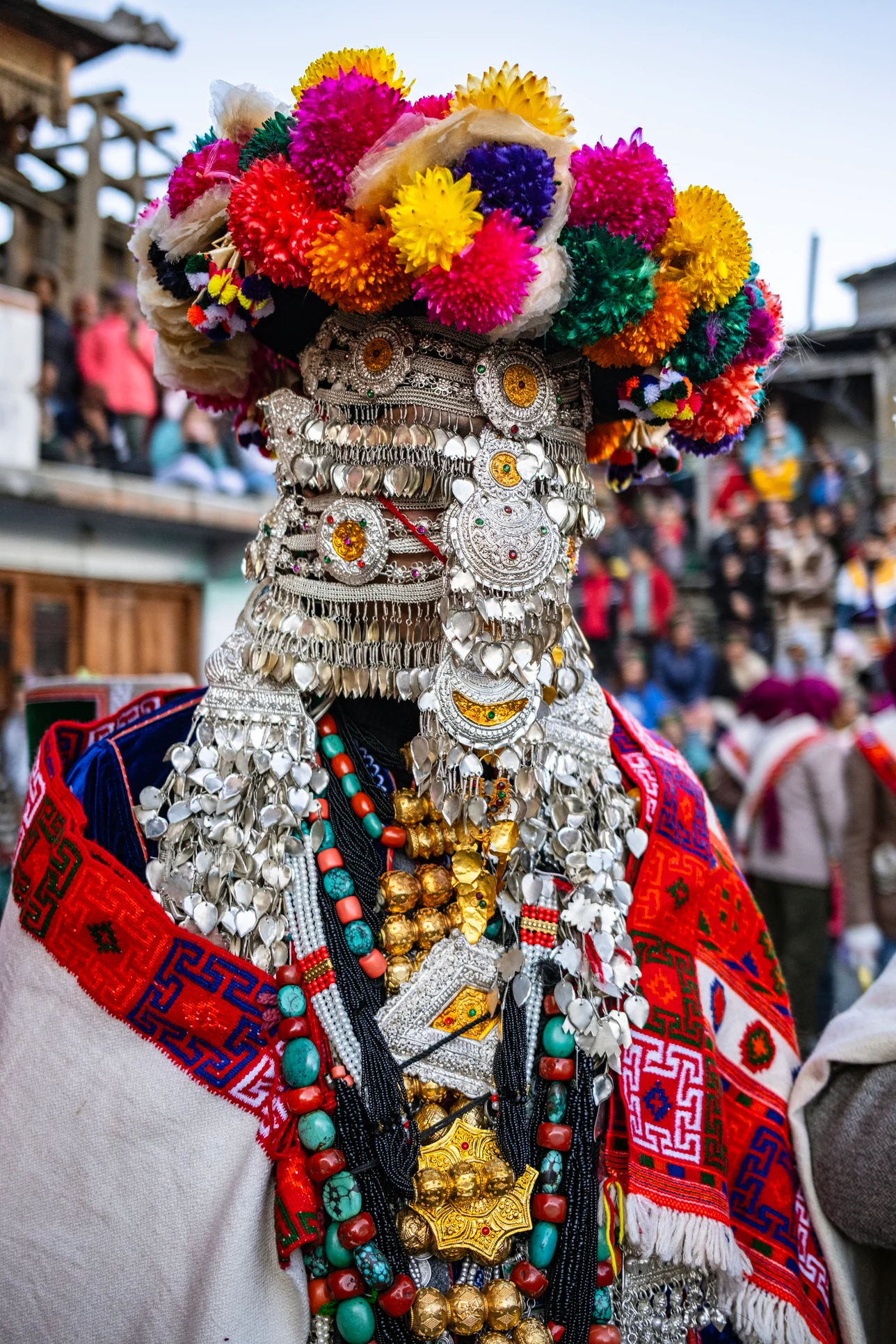
In fact, it was on a visit to Kinnaur for Sangla Holi that Singh and his friends stumbled upon Raulane in 2025. After long conversations with the locals, he learnt that the women of the house dress the men for the grand celebration. “The legend says the negative energies should not recognize anyone, that’s why they cover their faces,” he explains. “Dressed as Raulas (grooms), they wear thick woollens, a red belt called gachhi that shields their face and a dagger called rokas which is meant to protect them from evil. Some men take on the role of the Raulane (bride) wearing a traditional Kinnauri shawl called doru, a choli, the upper layer and the gachhi. Their heads are adorned with flower crowns made from white chamkas, yellow narkasanas and cotton seeds called bakhri kam.”
When you look at Singh’s pictures, an undeniable standout is the intricate silver jewelry that the men wear. The many lustrous layers glisten under the winter sun, while chunky black and turquoise beads and engraved gold plates hang heavy around their neck and shoulders. The photographer reveals each person wears precious jewels worth over $50,000 to the gathering. This isn’t a display of indulgence; the collection has been painstakingly crafted by ancestors and amassed by each family over generations. “It’s a very old symbol of their culture and wealth,” he says. “As urbanization creeps in, people are selling the gold and moving away for jobs. Wearing it during the festival is a reminder to preserve their beliefs.”
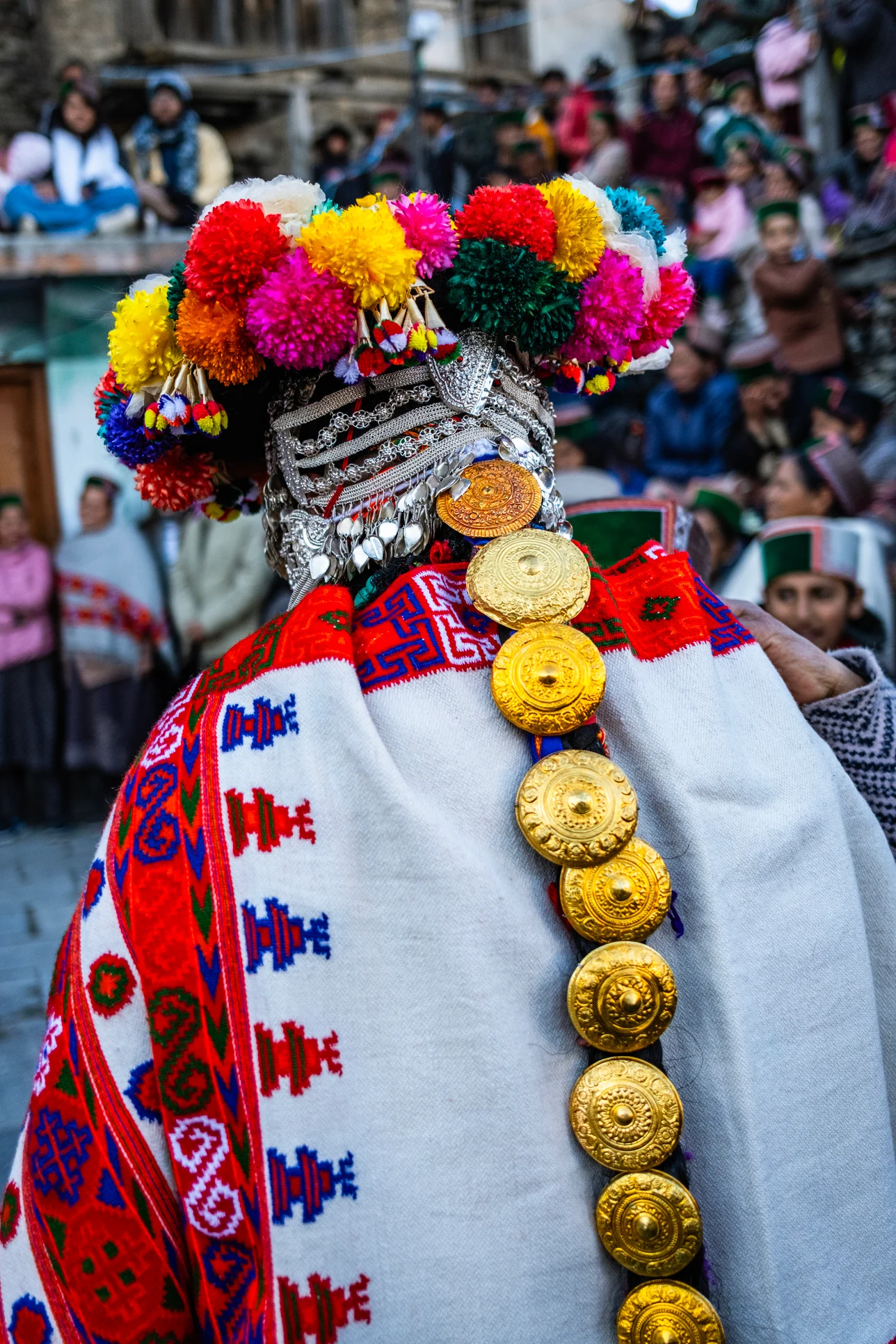
The legend says the negative energies should not recognize anyone, that’s why they cover their faces.
Previously, the unique designs of the masks and necklaces were unseen in any modern jewelry stores. The carving, the making, even the placement is rooted in the stories of the land, rarely ever leaving the mountains, but viral headlines and increased tourism have commercialized the indigenous gems, leading to fast fashion iterations that are divorced from the culture. Singh himself spotted models in Shimla seemingly wearing a version to walk the runway at the Dharamshala Winter Festival. The photographer was dreading this very fetishization of Raulane, especially as he’s witnessed the damage before. “When I saw the Sangla Holi in 2020 versus now, it’s completely different because it’s become a tourist trap,” he says. “People from the cities now carry beer into the temples to party, that’s not how it should be.”
The internet-backed popularity of small-town festivals brings its own conundrum. Many locals find employment from tourism—more footfalls means a better life. But the elders regret the exposure as it waters down their traditions, making them palatable to the masses. Singh says the government in Kalpa is trying to establish a balance. Most home stays and hotels are already sold out for the upcoming 2026 Raulane festival. In anticipation of the crowds, the organizers have decided to move the dance from the temple courtyard to a school playground. “The rituals will happen in the temple and only locals will be allowed there, no one from outside, to maintain the sanctity,” he says.
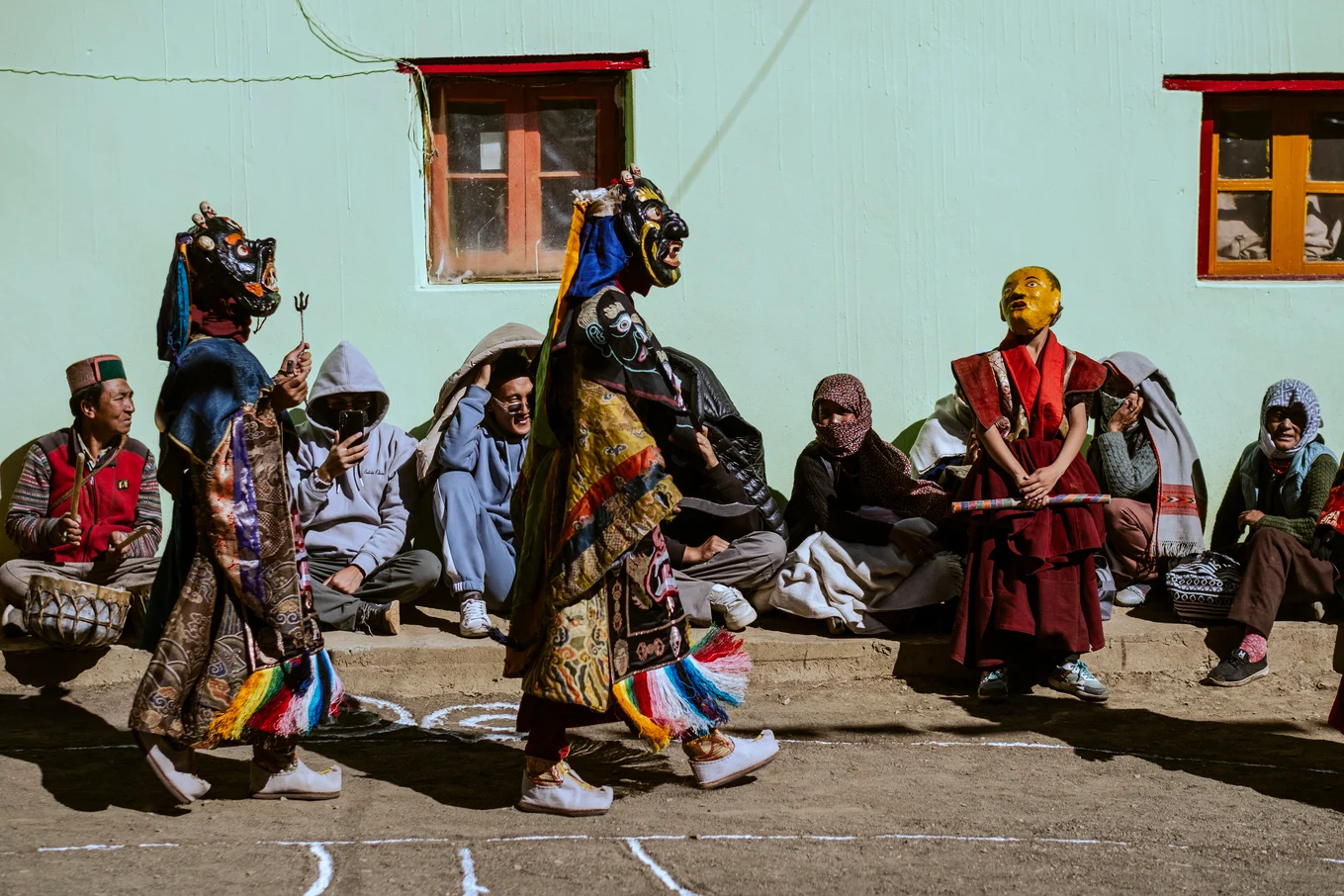
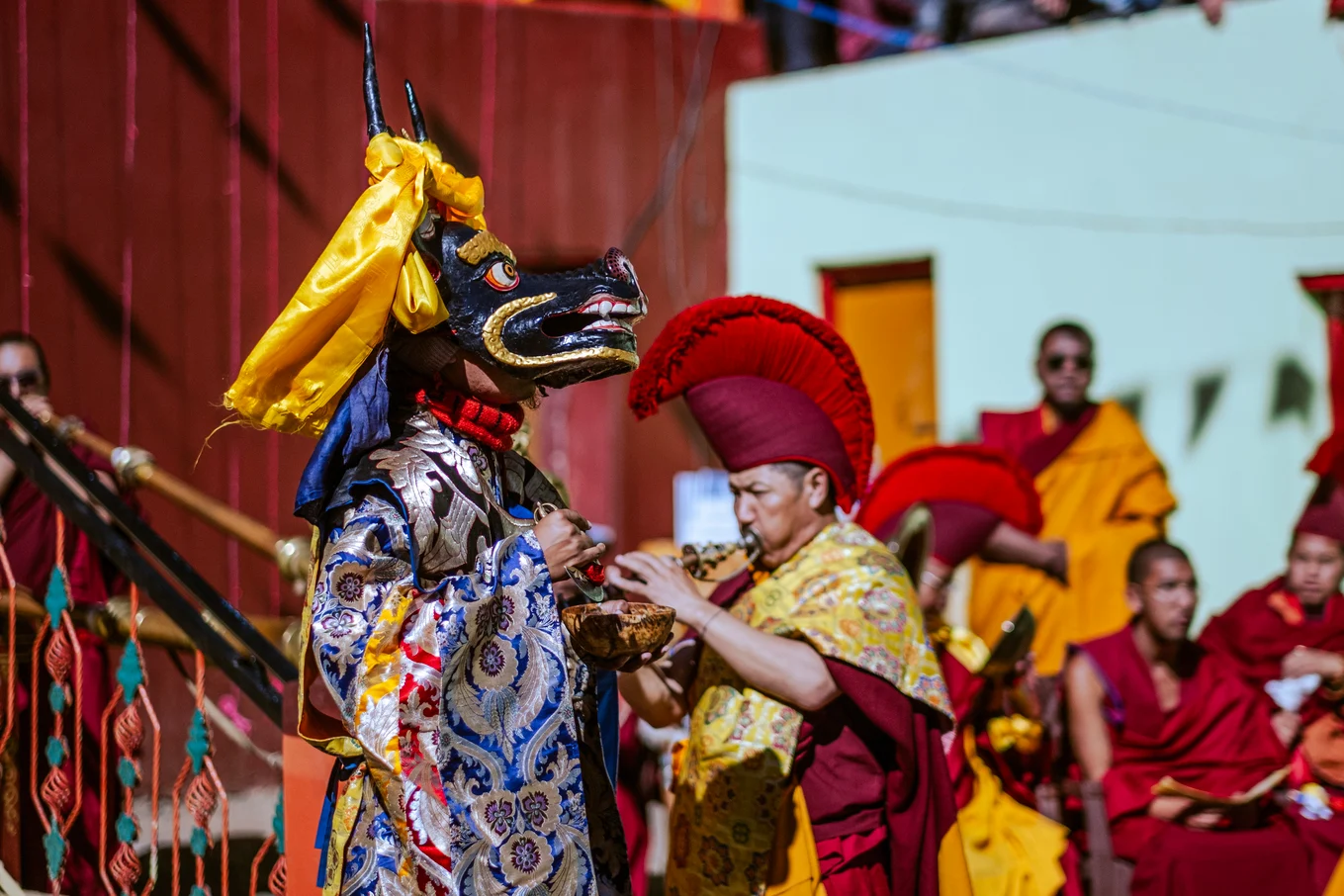
As development makes more remote villages accessible to all and as the internet makes proliferation of information faster—and often more careless—smaller communities stand the risk of facing the “hidden gem phenomenon.” In a culture of sameness, we’re all easily excited by the allure of something different, eccentric and individual. Yet in an attempt to experience this first hand, people forget that it’s important to carry and conserve the story of the land, not just its visual aesthetic.
This remains Singh’s primary worry when covering lesser known celebrations of India; he has no issue with exposure, he just hopes viewers can see his work with context and credit. “I plan to see the Holla Mohalla festival in Punjab this year,” he says. “That is my culture so I am excited to witness it, but I can only hope it hasn’t changed a lot.”