Tattoo artist Elliott Pittam is shifting his focus from the body to the canvas, and falling in love with color in the process. His pieces distill the good, the bad and the ugly of modern life in the city into a series of cinematic scenes. As he prepares to open his first solo show, he tells writer Maisie Skidmore about the characters he loves in London’s daily theatre.
At their best, cities serve as microcosms of the wider world—heaving hubbubs where people from all walks of life collide, to frenetic effect. From his chosen home in Hackney, artist Elliott Pittam is looking out onto London, collecting the scenes and characters he sees there to recreate in his paintings.
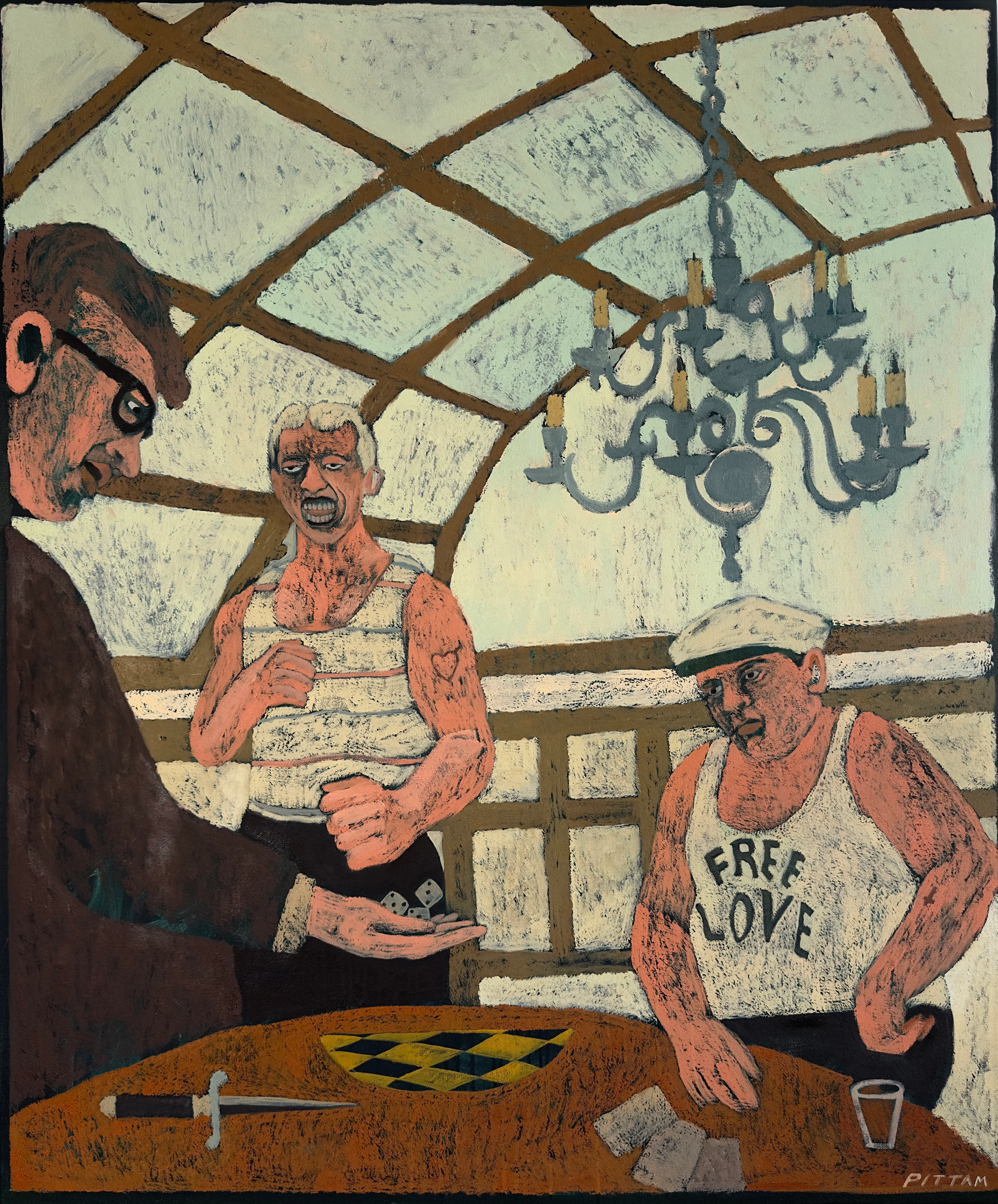
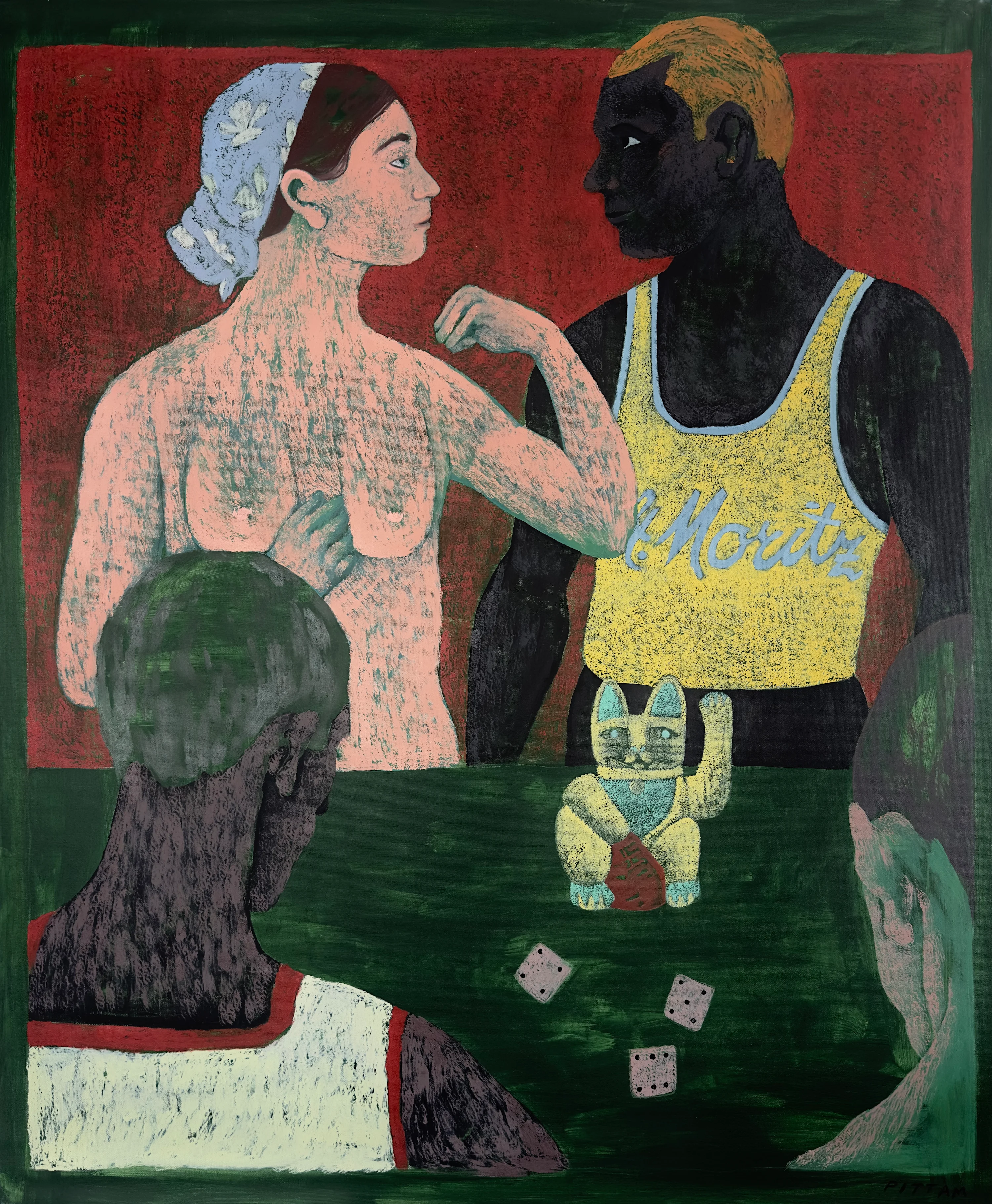
Expressive, charming and vaguely sinister, the resulting tableau of England’s capital isn’t necessarily nice, but it is familiar. “In London you get used to seeing such a diverse mix of people,” he tells me. “The culture is on your doorstep.” Literally, in his case—Pittam, his partner, artist Kara Rose Marshall and their six-year-old son Duke, live just off Broadway Market, a busy Victorian street that sees a varied crowd mingle with a steadfast local community, week in and week out. Many of his recent paintings recall scenes from his walk to and from the studio the couple share, down the road from their home.
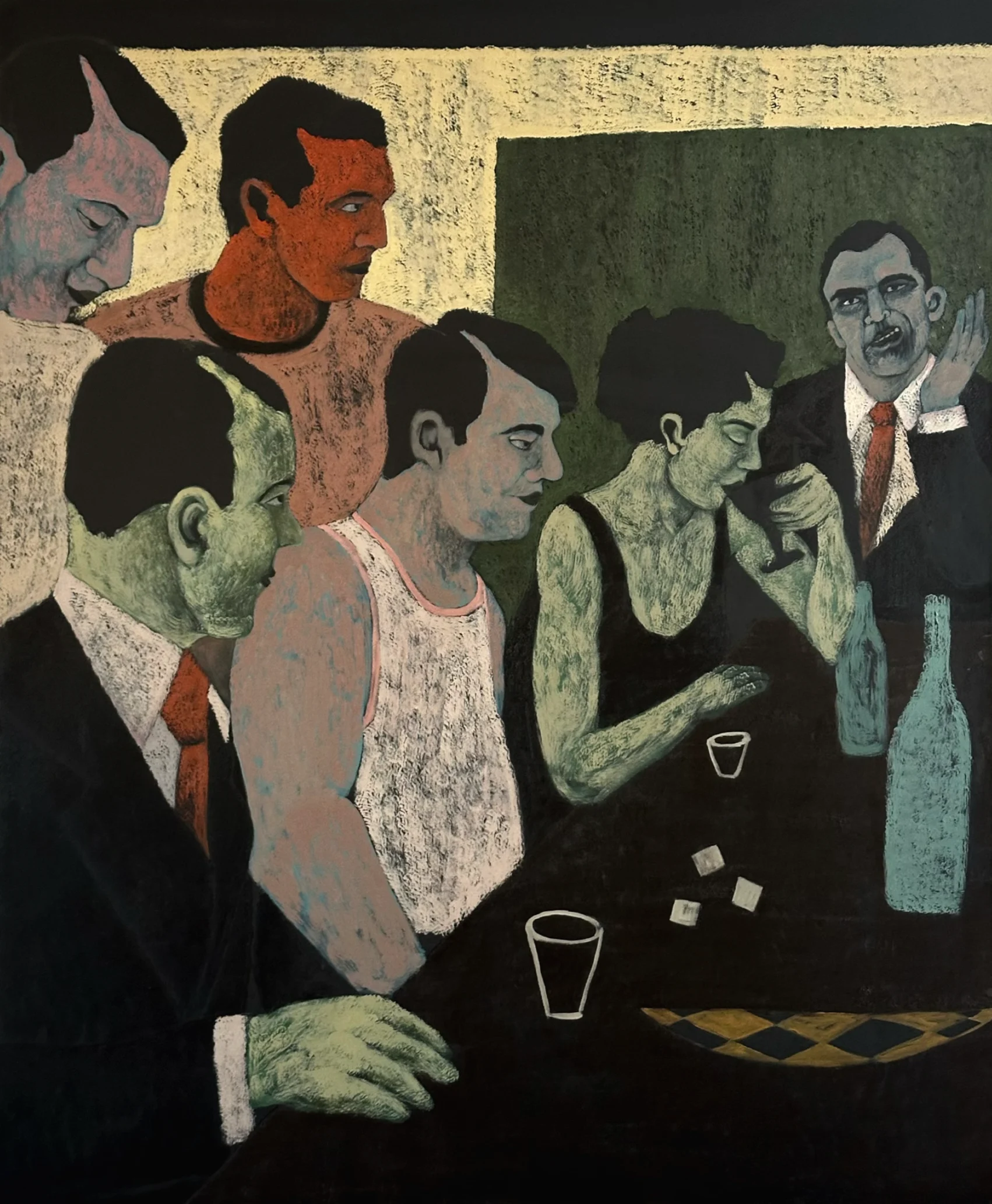
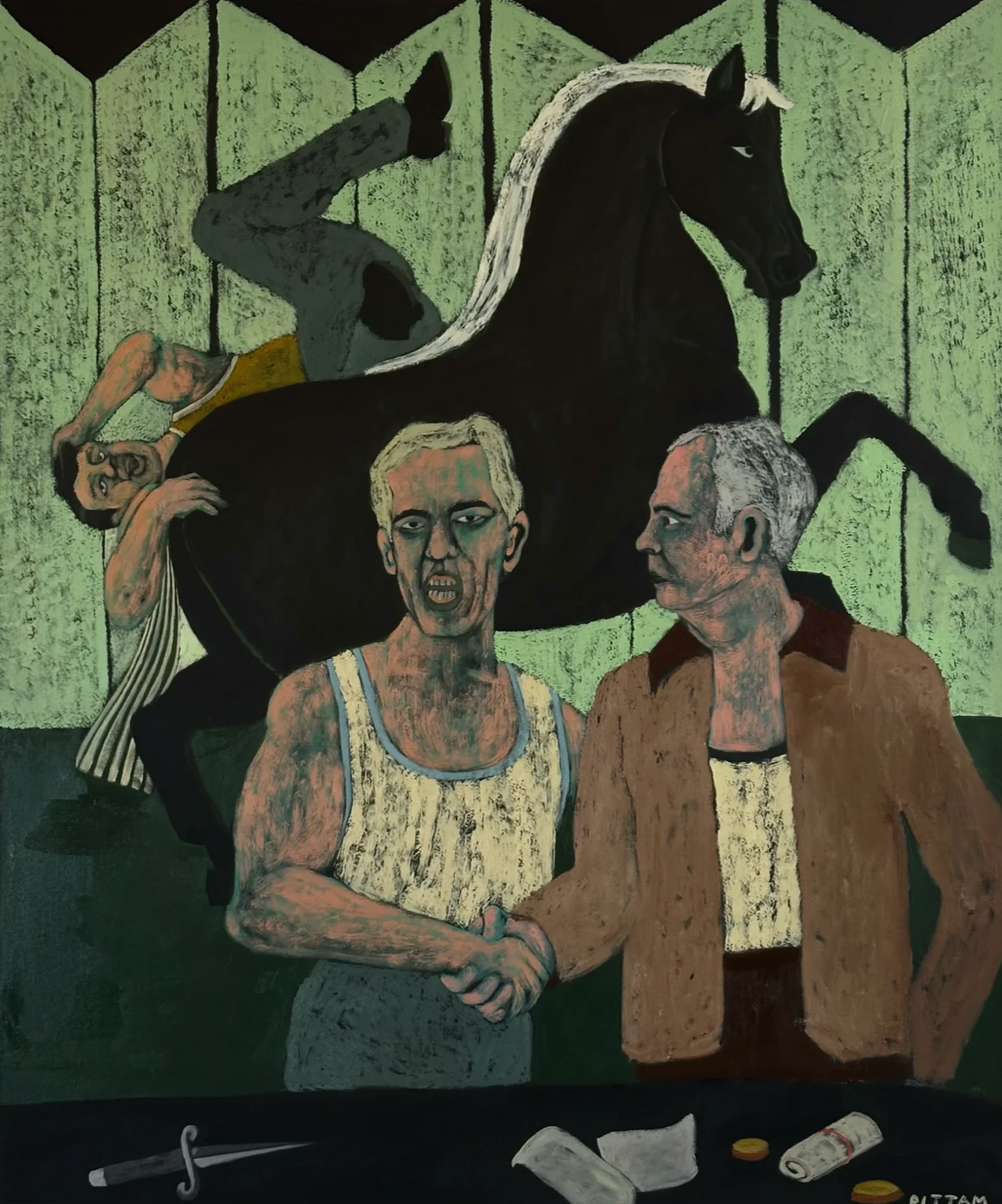
It’s a lot to do with nostalgia and Britishness… In many ways, we haven’t progressed greatly in day-to-day life. The violence, booziness, romance? It’s still there.
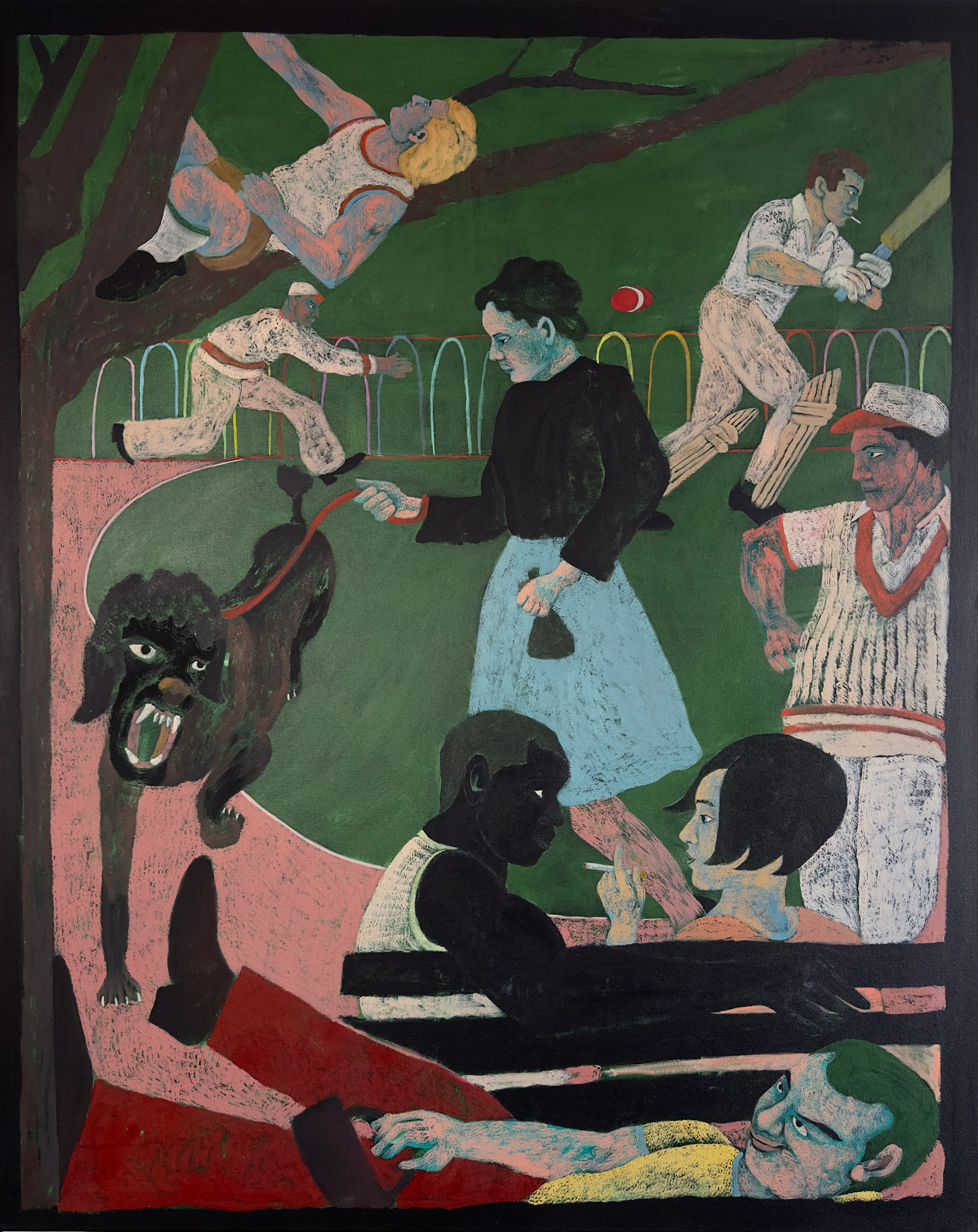
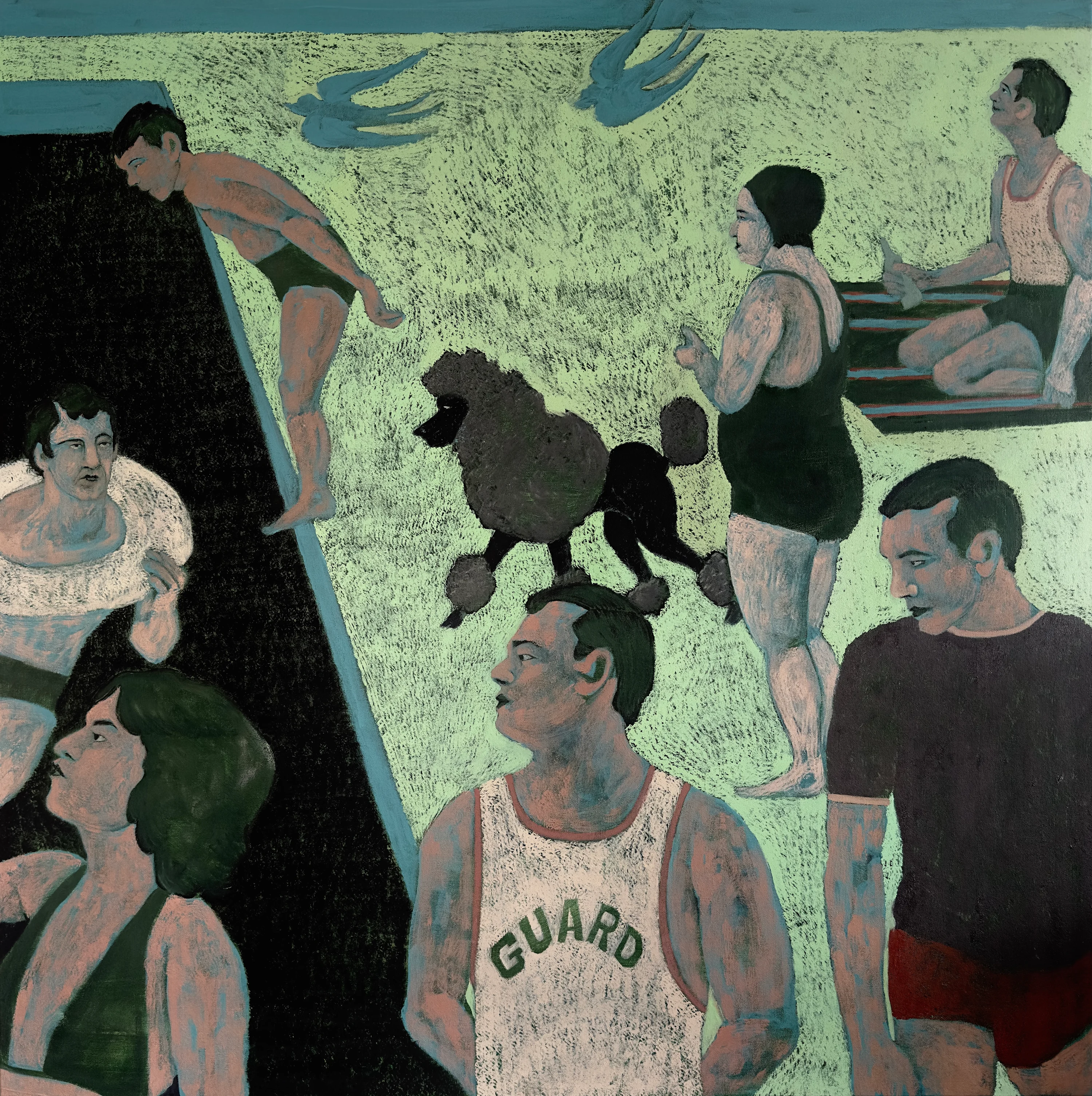
“You always see the same characters,” he explains as he describes a painting called “13,514 Days”—a vivid, theatrical community of characters gathered almost against their will, against the backdrop of his local well-trodden park. “We’ve got a favorite spot on London Fields where we sit and watch cricket. I painted the lady we always see, with a couple of poodles. There’s the bag snatcher in there. There’s a couple sitting on the bench, oblivious to it all, they’re in their own world. There’s Duke climbing up a tree.”
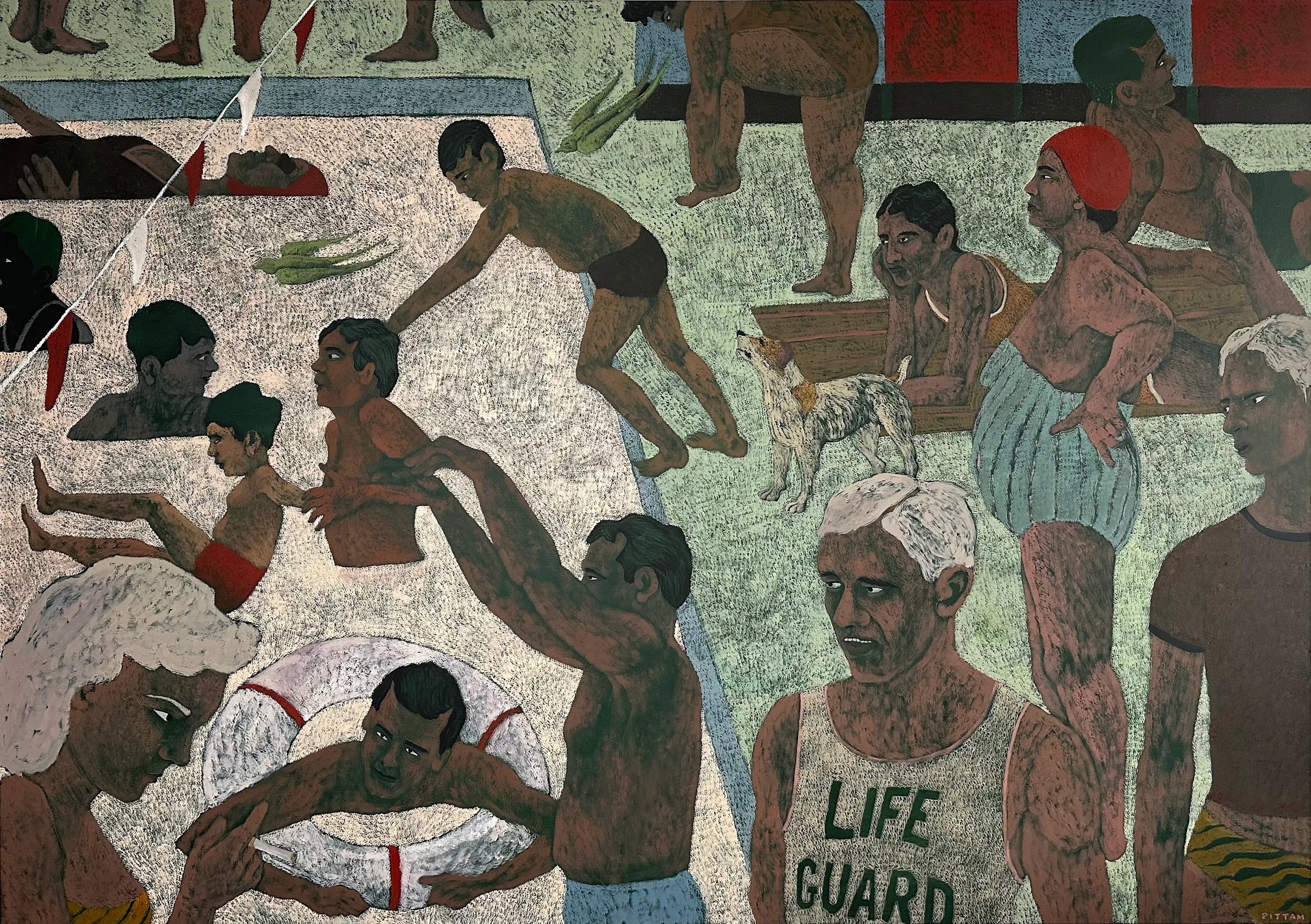
In “Heat Wave,” London Fields’ beloved lido takes center stage. It’s a liminal, democratic place where class is flattened, and a glistening cross-section of the local community is on display. This contrast appeals to Pittam. “The pool shot is split in two—there are the bathers, the people just trying to get their laps in, and then there are the posers on the side who really want to get noticed,” he says. “It’s a funny little spectacle.” In both works, the scenes are universal in their specificity. “People have similar experiences everywhere.”
“Painting is full of color, a lot looser, on a larger scale. It feels like freedom.”
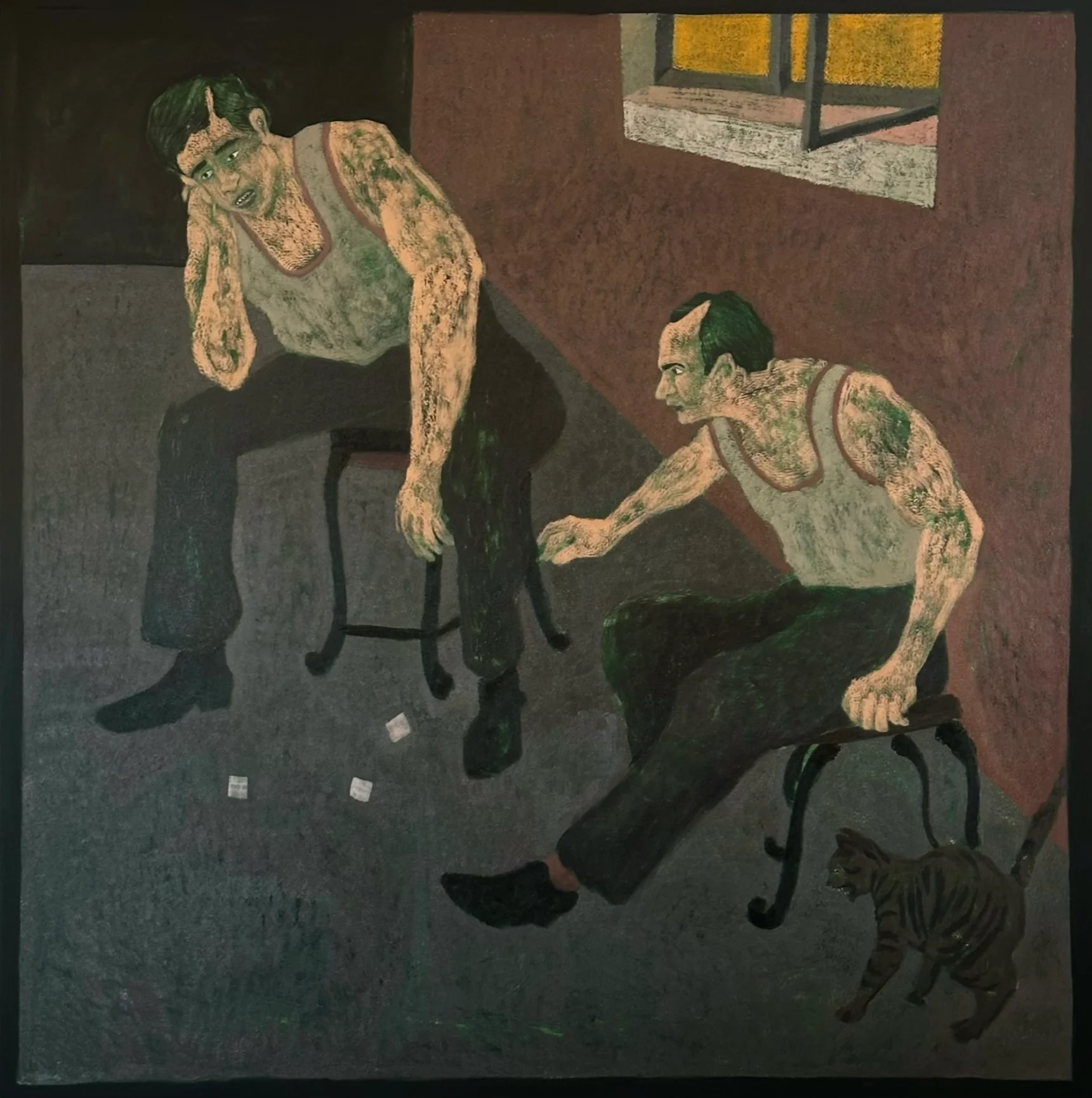
When we speak, Pittam is days out from opening his debut solo show “I’m Fine, How Are You?” at Haricot Gallery in north London. The exhibition will gather these two, and 14 other paintings that, for all their charm, expose the grubby underbelly of human nature.
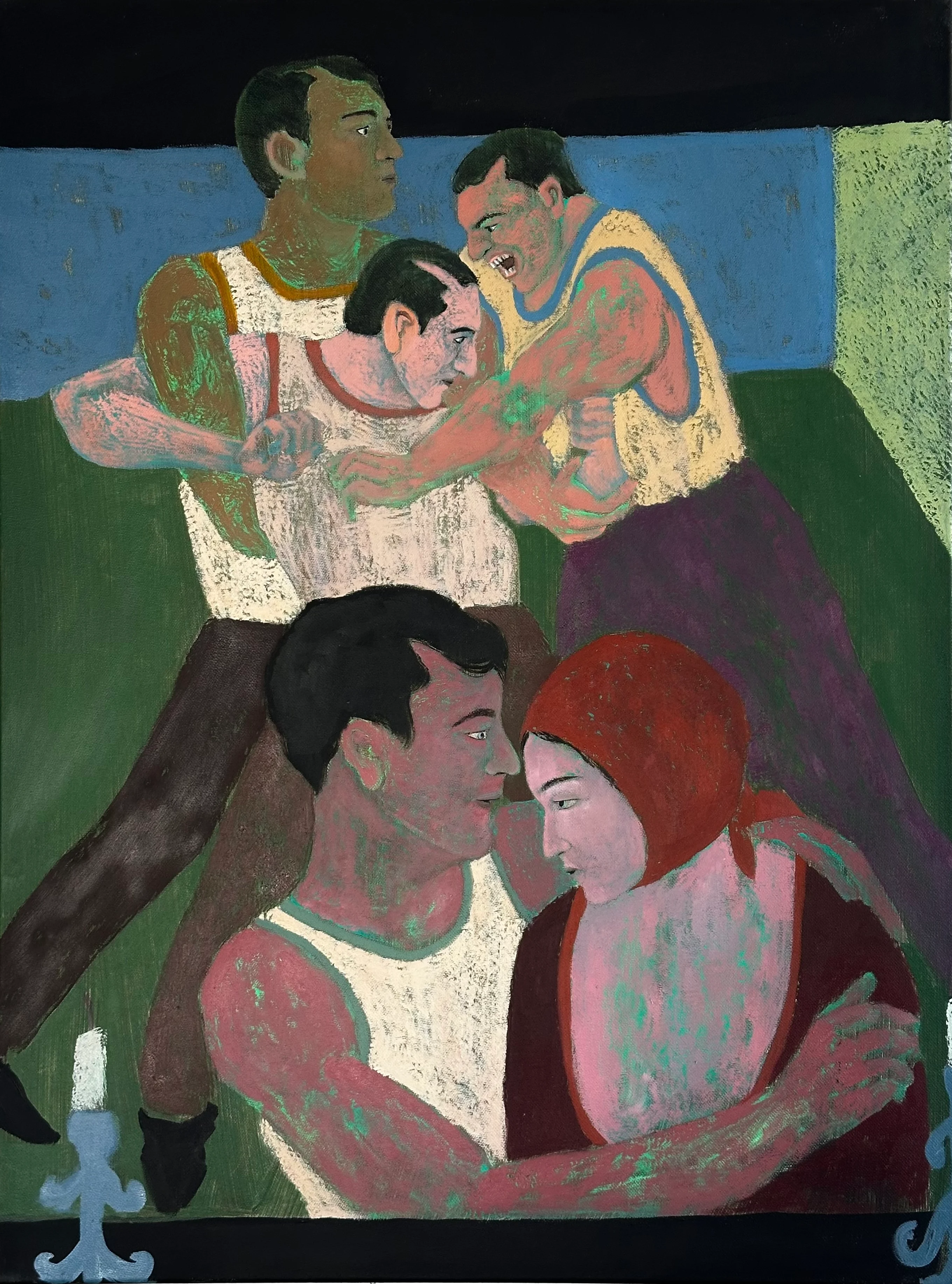
They share a commitment to pinning down body language; his subjects are most often leering, snarling, playing and posturing. “It’s a lot to do with nostalgia and Britishness,” he says. “The stereotypes and customs that share our idea of country. [I’m] looking at it through a slightly romantic lens, but also there’s a very Victorian idea behind them all.” Not for no reason: the artist has amassed a collection of unexpected reference material, including old Victorian newspapers documenting the crime that plagued the cities. “The illustrations are great, and often really funny, dark, crazy. But they mirror today’s headlines,” he says. “In many ways, we haven’t progressed greatly in day-to-day life.” There’s a Punch and Judy-esque energy in Pittam’s work that can be traced back centuries. “The violence, booziness, romance? It’s still there.”
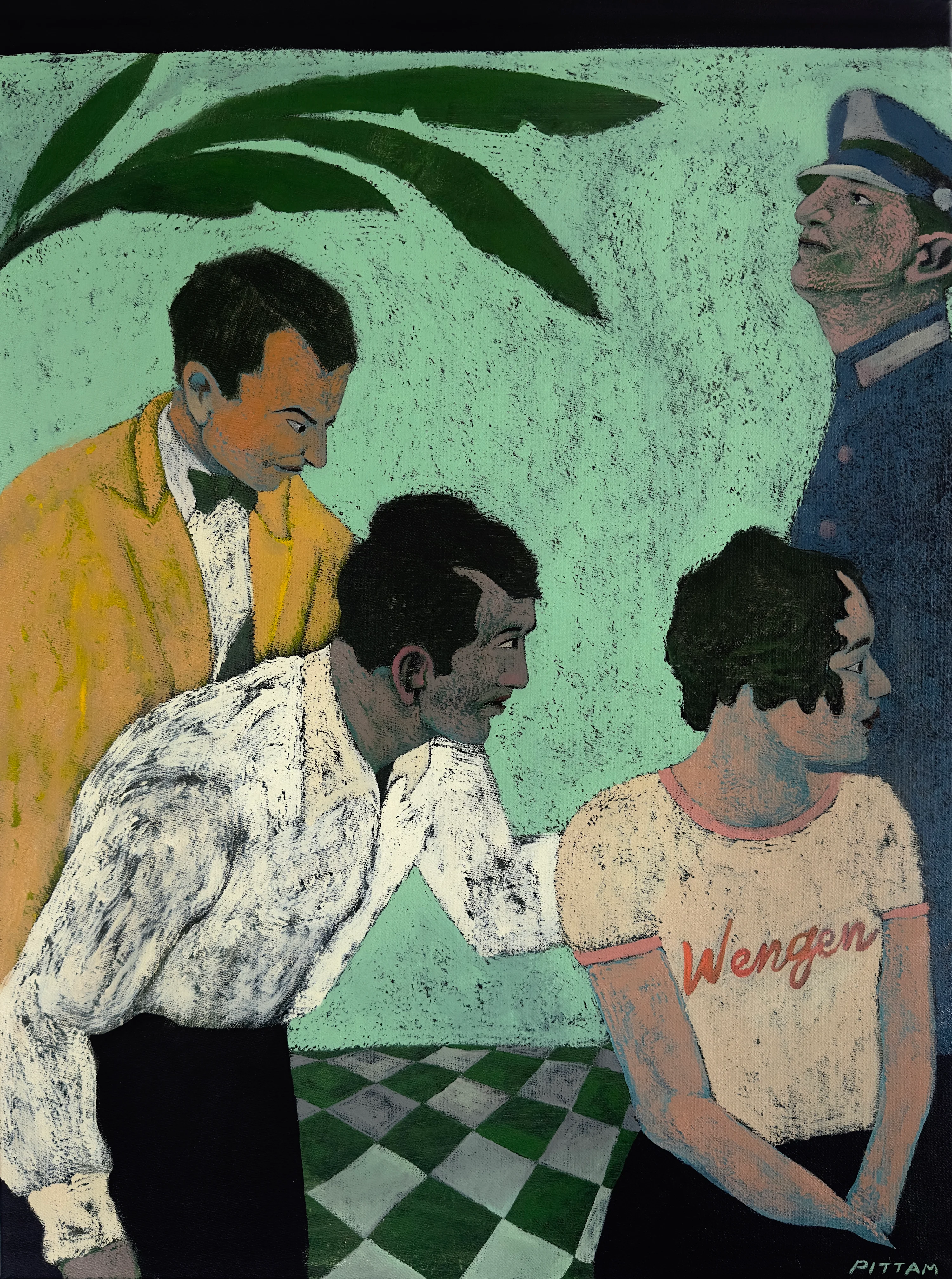
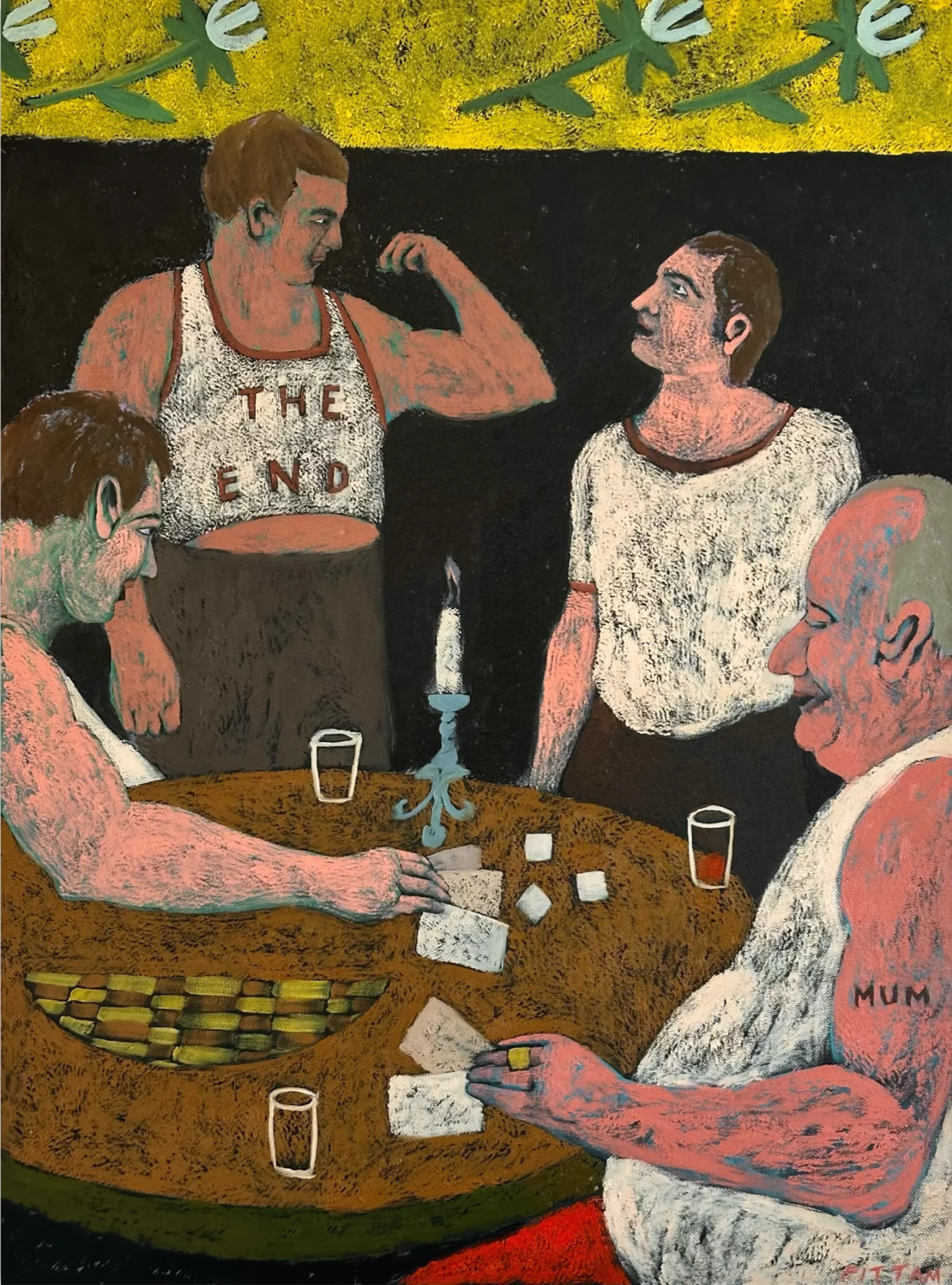
The color palette, flat and intentionally strange, presents a newer realm for Pittam, a self-taught painter who came to canvases during the pandemic, after spending more than ten years tattooing. “I’m totally obsessed with [color] at the moment. There’s a green that keeps coming back.” After so many years of working onto skin, in ultra precise fine lines and black ink, it’s a rich departure in many ways. “Painting is full of color, a lot looser, on a larger scale,” he says. “It feels like freedom."
And yet, many of the references are the same on paper as they were on the body. In tattooing, Pittam was drawn to everything from Russian criminal to Western traditional style. “The stuff that dates back to early England, when it was either for kings or prostitutes,” he says. “[Tattooing] wasn’t a middle class thing, then—either you’re royalty, or you’re in the slums.” There were few practitioners working; Pittam stayed close to their style, using the same size of needle to create his signature pieces. (He still tattoos, from time to time.)
Now that this body of work has been moved out of his studio space and into the gallery, Pittam is enjoying the calm left behind. Even so, he pushes back against the idea of a cohesive body of work, resisting bold overarching ideas about his practice. He references Harmony Korine’s collage-like approach to making cult classic Gummo, in which he eschewed a larger storyline in favor of building up a collection of individual scenes. “I never set out with any huge intention behind it,” Pittam says, with a modesty that feels utterly authentic. “I just paint the characters.”